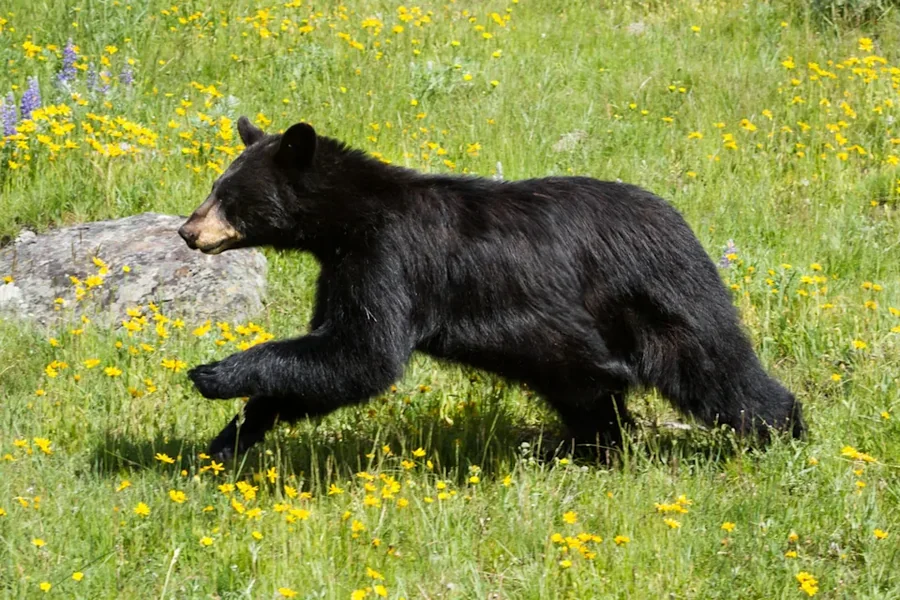
A black bear looks slow when it lumbers through the trees. That first impression can cost you your life. A healthy black bear can sprint much faster than you. It can close ground before you even process what is happening. This blog explains how fast a black bear can run, why it moves that way, and what that speed means for your safety. You learn how terrain, age, and surprise change a chase. You also see why running from a bear is almost never safe. Many people picture tame bears near roads or near places like Yellowstone Bear World. That image feels calm. It is also false. A wild black bear is a fast and powerful animal. Respect begins with clear numbers and honest facts. Your best defense is simple. Understand how fast a bear can move. Then plan your choices before you ever step onto the trail.
How Fast Can A Black Bear Really Run
You can sprint about 15 miles per hour for a short burst. A trained runner might reach 20. A black bear can reach about 30 miles per hour. It reaches that speed quickly. You cannot outrun it on flat ground. You cannot outrun it uphill. You cannot outrun it downhill.
The National Park Service states that both black and grizzly bears can reach about 30 miles per hour. You can read this guidance in their bear safety advice at NPS Bear Safety. That speed holds even when a bear weighs several hundred pounds. Muscle and strong legs give it quick thrust. Short bursts are enough for a charge.
Speed Comparison Table
The table below shows how a black bear compares to people and other common animals.
| Animal or Person | Top speed (miles per hour) | What this means for you
|
|---|---|---|
| Black bear | 30 | Reaches you fast on almost any ground |
| Grizzly bear | 30 | Same speed as black bear with more weight |
| Average adult human | 10 to 15 | Cannot outrun any bear |
| Elite sprinter | 20 to 23 | Still slower than a bear |
| White tailed deer | 30 | Main prey that can match bear speed |
| Domestic dog | 15 to 20 | Often cannot escape a charging bear |
Why A Black Bear Runs So Fast
A black bear looks round and slow. Its body hides strong features that support speed.
- Thick legs with strong muscles give short powerful strides.
- Wide paws grip dirt, rock, and snow.
- Flexible shoulders and hips let it turn while running.
- Light bones for its size keep weight lower than it looks.
You see those traits in many wild animals that chase or flee. A bear uses speed to reach food, escape danger, and defend cubs. It does not need to run long. It only needs seconds.
How Terrain Changes Bear Speed
You might think you can outsmart a bear by running uphill or downhill. That belief is false. A black bear trains every day as it climbs, digs, and sprints through rough ground.
- Flat ground. A bear reaches top speed fast. You cannot pull ahead.
- Uphill. Strong legs and claws give grip. You slow down. The bear keeps speed.
- Downhill. A bear lowers its body and stays balanced. You risk falls. The bear stays close.
- Thick brush. A bear pushes through branches. You get snagged and slowed.
Snow, mud, and loose rock also favor the bear. Its wide paws spread weight. Your shoes sink and slip. Terrain that feels hard for you often feels normal for the bear.
Age, Health, And Surprise
Not every black bear runs at full speed. Age and health change how it moves. Yet even a slow bear can reach you before you react.
- Cubs. Young bears can sprint in short bursts. They tire fast but move with sharp energy.
- Healthy adults. These bears reach the full 30 miles per hour. They can hold it long enough for a charge.
- Old or injured bears. Speed drops. Yet they still outrun most people.
Surprise shapes the risk. A startled bear may rush before it even thinks. A bear that guards food or cubs may charge with no warning at all. You often have seconds or less to respond.
Why You Should Never Run From A Bear
Running triggers a chase response. Predators respond to movement. When you run, you look like prey. You also turn your back and lose sight of what the bear does next.
Federal and state agencies repeat one clear rule. Do not run from a bear. The Alaska Department of Fish and Game explains this in their advice on living with black bears at ADF&G Black Bear Safety. You give yourself a better chance when you stand firm, stay calm, and follow known steps.
What To Do If You See A Black Bear
You can reduce risk with three simple actions. See the bear. Stay calm. Respond with purpose.
- Stay calm. Breathe. Speak in a low clear voice.
- Stand your ground at first. Do not run.
- Pick up small children at once.
- Group together so you look larger.
- Back away slowly while facing the bear.
- Leave a clear path for the bear to move away.
- Use bear spray if the bear comes within range.
If the bear charges and then stops, it may be a bluff. Hold your ground. Use your spray if it gets close. If contact happens, your response depends on whether it is a defensive attack or a predatory attack. That judgment is hard in the moment. This is why distance and prevention matter most.
How To Lower The Chance Of A Chase
You can act before you ever see a bear. Smart habits cut the chance of a close surprise.
- Hike in groups of three or more.
- Make noise in thick brush or near running water.
- Carry bear spray where you can reach it fast.
- Store food and trash in bear proof containers.
- Cook and eat away from your tent.
These steps respect the bear and protect your family. You do not need fear. You need clear truth. A black bear runs faster than you. It reaches you before you can flee. When you accept that, you stop planning to run. You start planning to stay alert and respond with calm strength.