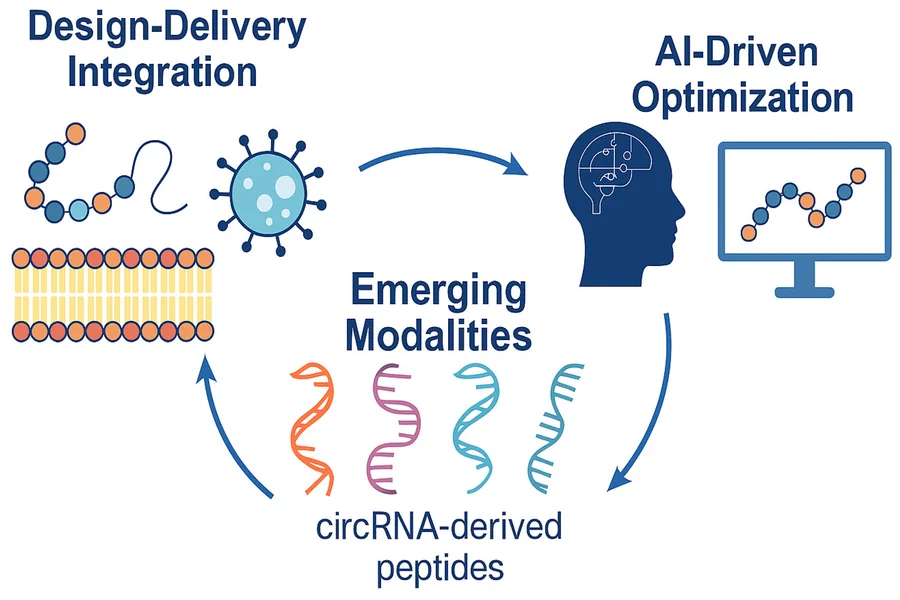
While peptides offer a fundamental treatment option, their level of resilience and performance in real world is crucial. That is one of those uncomfortable truths that make informed peptide choices a game changer. In therapeutic development that is easy to overlook when the science looks promising. The body does not give molecules an easy passage. A good peptide choice therefore begins with a more practical mindset: resilience factor for the journey, not just the molecule.
-
The Gut Does Not Give Peptides a Free Pass
Taking a peptide by mouth is simple enough. The problem starts when that peptide meets power of the gut. Hydrochloric acid, digestive enzymes, and the process of absorption can modify peptide structures before they have a meaningful opportunity to enter circulation.
This is where thoughtful peptide design starts making a difference. Depending on the molecule and its intended use, developers may look at:
- Structural modifications that make the peptide less vulnerable to degradation.
- Cyclization or other stabilizing approaches to improve its resilience.
- Protective delivery systems that shield the peptide during critical stages of the journey.
There is no universal fix here. A peptide designed for oral delivery has to be developed around the realities of the digestive tract—not treated as though every administration route presents the same problem.
That is why, when you buy peptides in Canada, choosing a specialized formulation matters. The question is not simply whether a peptide contains the right compound, but whether its design makes sense for the way it needs to work in the body.
A peptide intended for oral use needs a very different design strategy from one intended for another route of administration.
-
Receptor Residence Time of Peptides on the Cell’s Membrane
The time a peptide remains bound to its receptor is a very important measure that determines whether a drug or biological signal will yield positive results or not. Natural or unmodified peptides often have a very brief residence time on the receptor. They bind very quickly, send a signal, and then detach or are destroyed by the body’s enzymes.
Consequently, their impact or effect is short and limited, requiring high doses or frequent repetition to see lasting changes. However, the situation changes completely for well-optimized peptides (modified or engineered peptides). Through modern techniques in biology and chemistry, scientists can increase a peptide’s ability to stay on its receptor longer using the following methods:
-
Finding the Right Destination: Reaching Specific Treatment Targets
A medication may reach the bloodstream and fail to reach the place where it is needed. Different tissues present different biological conditions, and indiscriminate distribution can limit the practical value of a promising molecule.
This is why modern peptide development increasingly considers targeting as part of the design itself. Specific sequences or molecular features can be explored for their ability to interact with receptors or other biological markers associated with particular cells or tissues.
For a company developing a specialized therapy, that distinction matters. The objective is not simply delivery at scale; it is delivery with purpose—matching the molecular design to the therapeutic scenario rather than expecting the body to do all the targeting work.
-
Staying Effective Long Enough to Matter
Even after overcoming digestion, cellular barriers, or tissue distribution, another question remains: how long does the peptide remain useful? Some peptides are cleared or degraded relatively quickly. Others may require controlled exposure to achieve their intended biological effect. Designers can therefore explore approaches that influence stability, circulation time, release characteristics, or interactions with biological proteins.
That might mean considering:
- Sequence modifications that improve stability.
- Conjugation strategies that alter how the molecule behaves in circulation.
- Controlled-release systems where maintaining exposure over time is important.
The right choice depends on the therapeutic objective, not on whichever technology happens to be fashionable.
In essence, the strongest approach to peptide treatment is rarely about making a peptide universally more powerful. It is about finding a quality and an appropriate peptide formulation for the specific biological environment in which it must operate.