
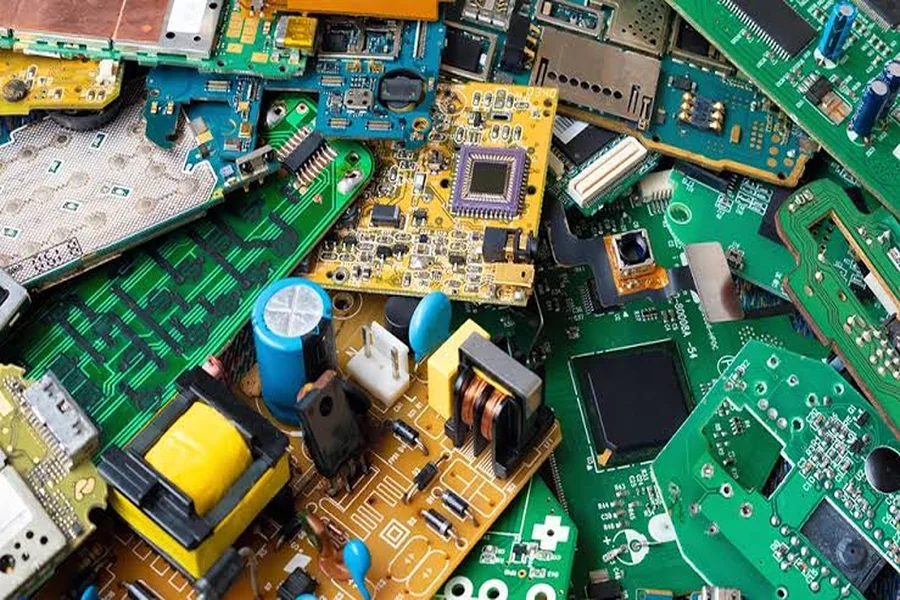
A program cancellation is one of the most disruptive events in electronics manufacturing. One day a production line has a schedule, a bill of materials, and committed stock. The next, it has none of those things: a warehouse with tens of thousands of components that were purchased against a demand that no longer exists.
What happens to those components depends on decisions that most manufacturing teams make under pressure, with limited visibility into their options. The outcomes vary enormously, from near-full recovery to near-total write-down. Understanding the path that stock takes after a cancellation explains a lot about why the electronics secondary market works the way it does, and why buyers in that market encounter the range of quality they do.
How Excess Accumulates in the First Place
Program cancellations are the most dramatic source of excess inventory, but not the only one. The same pattern plays out across a range of common manufacturing scenarios.
Cancelled programs leave the clearest footprint. A contract manufacturer builds to a customer’s BOM, orders components against a committed forecast, and absorbs the inventory when the program is cancelled. In most contract manufacturing arrangements, liability for purchased materials transfers to the customer at some point, but the practical question of who holds the stock and what to do with it often falls on the CM.
Demand forecast misses generate excess more quietly but more frequently. Forecasts are estimates, and estimates overshoot. When actual production volumes come in below plan, the surplus accumulates gradually across programs. By the time it is visible on a balance sheet, it represents months of purchasing decisions that could not have anticipated the actual outcome.
Engineering change orders (ECOs) create an immediate redundancy problem. When a design change replaces one component with another, every unit of the old part in the warehouse becomes obsolete overnight. A component that was essential yesterday has no purpose in tomorrow’s build.
Minimum order quantities are a structural source of overstock. Suppliers set minimum order quantities that are often larger than the quantities a specific program requires. The excess from an MOQ overbuy may sit unused for months or years, waiting for a follow-on program that either comes too late or never materialises.
In each of these cases, the result is the same: original manufacturer parts, in original packaging, with intact documentation, that the company holding them cannot use and needs to move.
The Standard Exits, and Why They Underperform
Once a manufacturing company acknowledges it has excess inventory to dispose of, it typically cycles through a short list of options.
Internal reallocation is the first check. Can another program within the same organisation use the parts? For large manufacturers with multiple product lines, this is sometimes possible. For contract manufacturers serving different end customers with different BOMs, it rarely is.
Return to distributor or supplier is possible only within the return window and under the original supplier’s terms. Most excess inventory has aged past the point where this is an option.
Broker sales are the most common exit. A broker contacts the company, makes an offer, and moves the stock into their network. The process is fast and requires minimal effort from the seller. The recovery price reflects that convenience: brokers price to resell profitably, which means the manufacturer receives a fraction of what the parts are worth in the market.
Auction platforms reach a wider pool of buyers than a single broker but push prices toward the floor. Buyers on an auction platform are specifically looking for underpriced stock. The auction format works against the seller.
Scrap recovers the material value of the components. For most electronic parts, this means recovery of a few cents per unit at most, regardless of what the parts are worth as functional components.
Each of these options has one thing in common: the seller has no visibility into what the parts are actually worth in the market, who the buyers are, or whether a better exit exists. The urgency of clearing the stock almost always wins over the patience required to find that better exit.
Where the Stock Goes Next
Parts that exit through broker sales and auctions enter a distribution chain with variable quality control.
At the better end of that chain, the stock passes through independent distributors who maintain documented inspection programs, source from known suppliers with track records, and test escalation lots through accredited laboratories. Parts sold through this channel carry documentation that supports their provenance, and buyers receive inspection records alongside the shipment.
At the worst end, parts move through a series of transactions that progressively obscure their origins. Each handoff reduces traceability. By the time a part reaches a buyer, the original manufacturer’s documentation may have been separated from the lot, and the only assurance available is the seller’s word.
This is how the same type of component (original manufacturer parts from a cancelled program) can arrive at a buyer in very different conditions of documentation and verifiable history, at prices that do not obviously reflect the difference.
A Better Path for the Stock
What changes the outcome for both the manufacturing company with excess to dispose of and the buyer looking for that part is a direct connection between the two, without the intermediary chain that degrades traceability at each step.
A platform model built around this principle works as follows: the manufacturing company lists its excess directly through a verified channel that connects it to a global buyer network. The stock stays with the manufacturer until a transaction is agreed. The buyer receives documentation tracing the parts directly to their manufacturing partner source. The intermediary chain is eliminated, and with it, the progressive erosion of provenance that makes open-market sourcing risky.
Maketronics operates exactly this kind of platform: a two-sided verified marketplace connecting manufacturing partners’ authenticated surplus directly with buyers worldwide, with stock documented as original OEM material and available through a single qualified point of contact. For buyers, it is a route to stock with a traceable provenance story. For manufacturing partners, it is a better exit than the broker call they would otherwise take.
What It Means for Buyers
For procurement teams trying to source a component that is no longer available through the authorized channel, the practical implication of all of this is straightforward.
The same part can be sourced from multiple places in the secondary market. Those sources are not equivalent. Stock that originated from a cancelled manufacturing program and moved directly through a verified platform carries a materially different risk profile than stock whose chain of custody is unknown.
When the application is critical and the documentation needs to be defensible (for an audit, for a quality review, for a regulated program), the provenance of the stock is not a secondary consideration. It is the primary one.
About Maketronics
Maketronics sources obsolete and hard-to-find electronic components through a vetted global supplier network, with inspection-gated payment release and testing aligned to AS6081 and AS6171. The company serves buyers in 17 countries across industrial, automotive, aerospace, defense and medical sectors.