

A woman settles into a weight she is genuinely happy with, then notices that a small area along her waist or thighs simply will not follow the rest of her progress. It is a specific frustration, not a dramatic one, and it rarely responds to more discipline in the gym.
Dubai and Abu Dhabi clinics now offer several non-surgical ways to address exactly this concern, and Onda Pro is a name patients hear often. If different treatments reshape the body without surgery, the question is why they work so differently and how a patient knows which one truly suits her.
Key Takeaways
- Onda Pro uses 2.45 GHz microwave energy for non-invasive body contouring.
- It can target localised fat, cellulite and skin laxity at different tissue depths.
- Onda Pro differs from cryolipolysis, RF, ultrasound and liposuction because each uses a different mechanism.
- Onda Pro is not a weight-loss treatment or a replacement for liposuction.
- Treatment suitability depends on anatomy, skin quality, treatment area and individual goals.
- Current evidence supports individualised treatment planning, but longer-term research is still needed.
Why Onda Pro Is Different From Conventional Body Contouring
“Traditional body contouring” sounds like one specific treatment, but it isn’t. The phrase covers a wide range of surgical and non-surgical body contouring techniques, each built on a different idea about how to reshape tissue.
Comparing them properly means looking at energy source, tissue interaction, treatment depth, and whether the method involves surgery at all.
How Onda Pro’s Technology Works
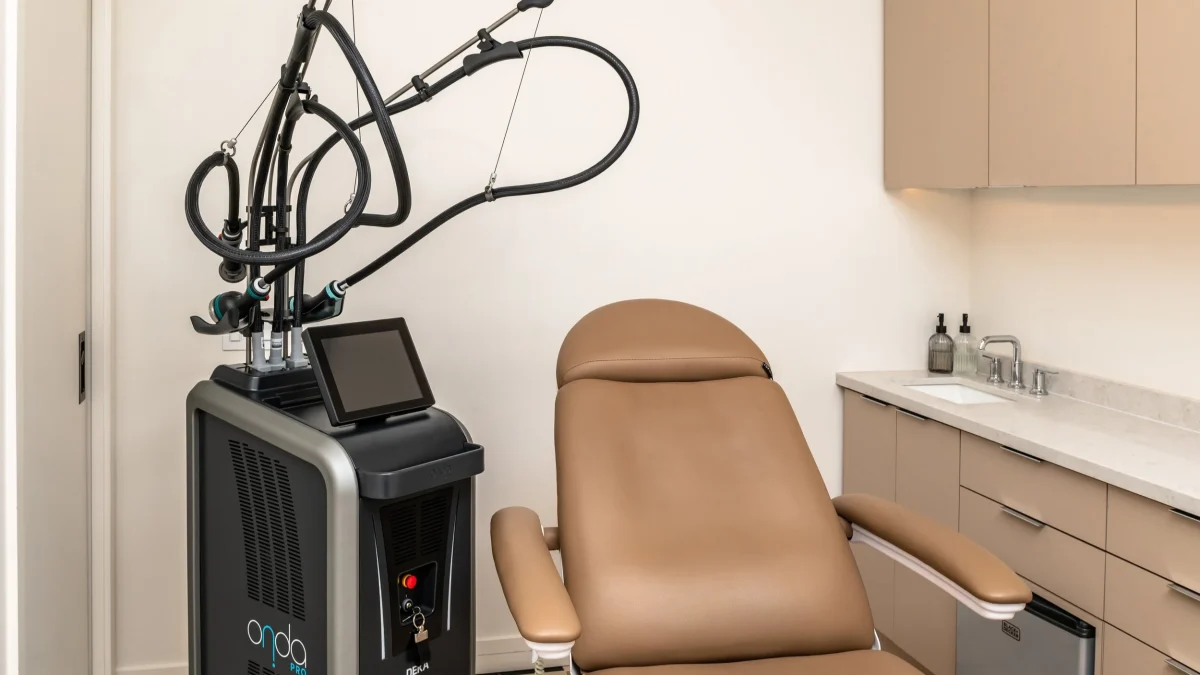
Onda Pro is built around 2.45 GHz microwave energy, delivered through a platform called Coolwaves. The system pairs that energy with contact cooling at the skin surface to support comfort during treatment.
It also uses more than one handpiece, each designed for a particular depth and concern, rather than a single setting applied to every patient and every area.
The deep handpiece is generally used for localised fat, the shallow handpiece for cellulite and skin tightening closer to the surface, and the pocket handpiece for smaller areas that need more precise work.
The detail worth remembering: calling a device one that “uses heat” tells you little. What matters is where the energy goes, how deep, and which tissue it affects.
How Does Onda Pro Compare With Other Body-Contouring Treatments?
Once the mechanism is clear, the comparisons make sense. Each works through a different way of interacting with tissue, not an older or newer version of the same idea.
Onda Pro vs Cryolipolysis
Cryolipolysis works through controlled cooling, typically for a discrete, well-defined pocket of fat. Onda Pro relies on microwave energy instead.
Depending on the handpiece and treatment plan, Onda body contouring can also address cellulite or skin laxity in the same course. Neither approach wins in every case; it depends on what is actually being treated.
Onda Pro vs Radiofrequency and Ultrasound
RF, ultrasound and microwave get grouped together simply because none involve an incision, though real differences remain between them.
Focused ultrasound concentrates acoustic energy at a chosen depth. Onda Pro uses 2.45 GHz microwave energy instead, absorbed by tissue with higher water and fat content. What matters is energy type and tissue interaction, not which name sounds more advanced.
Onda Pro vs Liposuction
Liposuction is surgery. Fat is physically removed under anesthesia, producing a more immediate, often more pronounced change than any non-invasive option achieves.
Onda Pro does not remove tissue. It works through energy delivery, not extraction, so it isn’t a substitute for liposuction in every case.
Non-surgical body contouring tends to refine a specific area rather than produce major fat loss.
What Is the Actual Treatment Goal?
With the technology and comparisons in mind, the more useful question is what this is actually meant to achieve for a given patient.
Localised fat is one target. An Onda Pro treatment may be considered for a small, defined area that has resisted diet and exercise, not for general weight concerns.
Cellulite is more complicated than excess fat under the skin; connective tissue bands, surrounding fat, and skin structure all play a part, which is why fat-only treatments don’t always help.
Skin laxity is the third piece. Controlled thermal effects at the right depth may support some collagen contraction over time, though visible change varies from person to person.
A treatment should be chosen for the problem being addressed, not for the name on the machine. Onda body contouring works well precisely because it can adapt across several concerns rather than forcing one fix on all of them.
Who May Be Suitable for Onda Pro?
Good candidates are usually people looking to refine a specific area, not seeking a solution for obesity or significant weight loss. That distinction shapes the conversation.
Suitability tends to depend on a few things:
- how much fat is present, and where
- the degree of visible cellulite
- existing skin laxity in the area
- general health and relevant history
- what result the patient is realistically hoping for
An Onda Pro treatment plan should follow individual assessment and be provided in an appropriately licensed healthcare setting by qualified professionals.
What Does the Evidence Actually Say?
Peer-reviewed research on Onda Coolwave technology does exist, including a 2024 consensus paper that summarises recommendations on patient selection and treatment parameters across multiple clinical centres.
That same paper was direct about what’s missing: an evaluation of long-term efficacy and safety was identified as a gap, and studies in this area vary in design, sample size, and protocol.
Because of that, readers should interpret long-term outcomes for non-surgical body contouring with some caution, and further independent research would help. That reflects where the evidence currently stands, not a specific problem with the technology itself.
No cosmetic procedure, surgical or non-surgical, is intended as a weight-loss treatment. Body contouring changes shape in a defined area; it does not replace a healthy weight.
Treatment selection here is personal and should follow an honest look at anatomy and goals rather than a preference for one technology’s name. Patients in Dubai and Abu Dhabi weighing Onda Pro against other options can discuss their concerns with a qualified aesthetic team at AestheticsCC, where suitability is assessed individually.
Frequently Asked Questions
Is Onda Pro a weight-loss treatment?
No. It’s intended for localised body contouring, not obesity or general weight loss, and won’t meaningfully change what a scale shows.
Is Onda Pro the same as liposuction?
No. Liposuction is a surgery that removes fat directly. Instead, it is non-invasive and employs controlled delivery of energy.
Can it help with cellulite and sagging skin?
Onda body contouring can treat both, depending on the treatment plan and handpiece used. Results vary and should not be taken for granted.
How do I know if it’s right for me?
That depends on anatomy, skin quality, and goals, which is really a question for a proper clinical assessment rather than a general guide.