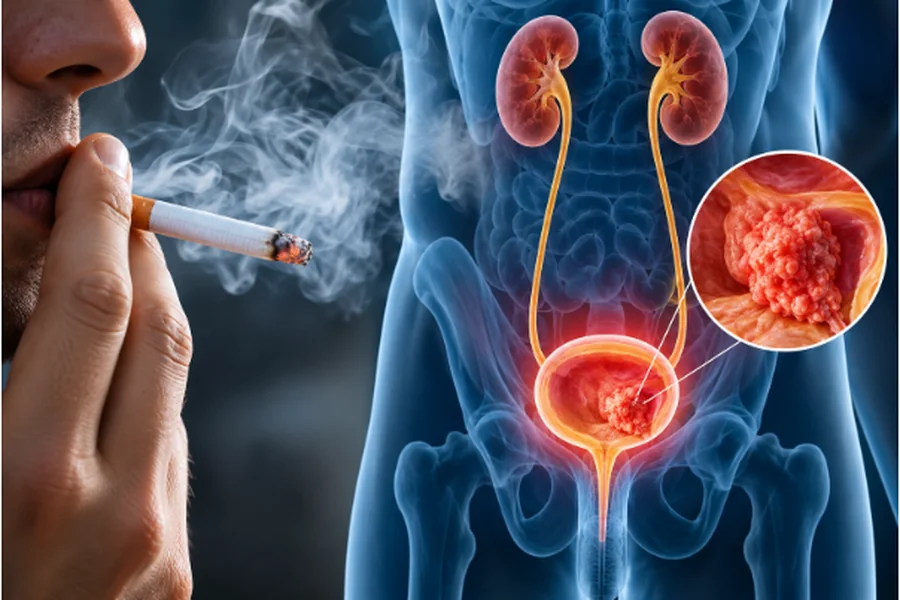
Smoking is widely associated with lung and respiratory diseases, but its effects can extend to the urinary system as well. Tobacco smoke contains numerous chemicals that can enter the bloodstream and eventually reach the urine. The bladder stores this urine, exposing its lining to these substances.
Smoking is one of the major established bladder cancer causes and risk factors. Understanding this connection is important, particularly for people who smoke regularly or have developed unexplained urinary symptoms. Recognising warning signs and seeking medical evaluation can help identify bladder problems at an earlier stage.
Can Smoking Cause Bladder Cancer?
Yes. Smoking is a major risk factor for bladder cancer. Chemicals in tobacco smoke are absorbed into the bloodstream and processed by the body. Some of the resulting chemicals are filtered by the kidneys and removed through urine.
Because urine is stored in the bladder, the bladder lining can be exposed repeatedly to these potentially harmful substances. Over many years, repeated exposure can contribute to cellular changes that increase the risk of bladder cancer.
The risk is associated with smoking history, including the amount and duration of exposure. Importantly, smoking is a risk factor, not a guarantee that an individual smoker will develop bladder cancer. Similarly, people who do not smoke can still develop the disease because several other risk factors are involved.
How Smoking Affects the Bladder
The connection between smoking and the bladder can be understood in several steps:
- Tobacco smoke enters the body:
When a person smokes, tobacco smoke introduces numerous chemicals into the lungs. - Chemicals enter the bloodstream:
These substances and their metabolites can circulate through the body. - The kidneys filter the blood:
The kidneys remove waste products and certain chemicals from the bloodstream as urine is produced. - Chemicals enter the urine:
Some tobacco-related carcinogens or their metabolites can be present in urine. - The bladder stores the urine:
Urine remains in the bladder until it is passed from the body. Repeated exposure of the bladder lining to carcinogenic substances can contribute to cellular damage over time.
This is one reason smoking is an important factor when discussing bladder cancer causes and prevention.
Bladder Cancer Causes and Risk Factors
There is usually no single cause that can explain why one person develops bladder cancer and another does not. Instead, several factors may influence risk.
Important established or recognised risk factors include:
- Smoking: Cigarette smoking is one of the strongest known environmental risk factors for bladder cancer.
- Occupational chemical exposure: Long-term exposure to certain chemicals used in industries involving dyes, paints, metals and petroleum products has been associated with increased risk.
- Increasing age: Bladder cancer occurs more frequently in older adults.
- Previous radiation treatment: Radiation involving the pelvic area can be associated with an increased risk in some circumstances.
- Certain chemotherapy drugs: Some medicines used to treat cancer can increase bladder cancer risk.
- Chronic bladder irritation: Certain long-term bladder conditions or repeated irritation may contribute to risk.
- Family or genetic factors: A family history of bladder cancer and certain inherited genetic factors may increase susceptibility in some individuals.
Having a risk factor does not mean that cancer will definitely develop. Conversely, bladder cancer can occur in people without obvious risk factors.
Bladder Cancer Symptoms You Should Not Ignore
The symptoms of bladder cancer can vary. Some of the most common urinary changes include:
- Blood in urine: Blood may make urine appear pink, red or rusty, although sometimes it is only detected through laboratory testing.
- Changes in urination: A noticeable change in normal urinary habits may require evaluation.
- Frequent urination: Needing to urinate more often than usual can occur.
- Pain or burning during urination: Burning or discomfort while passing urine should not be ignored if it persists.
- Urinary urgency: You may feel an urgent need to urinate even when the bladder is not full.
- Pelvic or abdominal discomfort: Pain or pressure may occur in some cases.
- Lower back pain: Particularly one-sided lower back pain can occur when disease has become more extensive.
These symptoms can also result from urinary tract infections, kidney stones and other non-cancerous conditions. However, persistent or unexplained urinary symptoms should be medically evaluated.
Is Blood in Urine Always a Sign of Bladder Cancer?
No. Blood in the urine, known as haematuria, does not automatically mean bladder cancer.
Urinary tract infections, kidney stones, prostate problems, certain medications and other kidney or urinary conditions can also cause blood in the urine. In some cases, the amount of blood may be so small that it is only detected through a urine test.
However, visible or unexplained blood in the urine should never simply be assumed to be harmless. A doctor can determine the likely cause through medical history, examination and appropriate testing.
How Is Bladder Cancer Diagnosed?
If bladder cancer is suspected, doctors may use several investigations:
- Urine tests:
A urine sample may be checked for blood, abnormal cells, infection or other findings. Urine cytology and selected urine tumour-marker tests may also be used in appropriate situations. - Imaging:
Tests such as CT urography, CT scans or MRI may help examine the urinary tract and surrounding structures. - Cystoscopy:
A thin, lighted instrument called a cystoscope is passed through the urethra to allow the doctor to examine the inside of the bladder. - Biopsy:
If an abnormal area is identified, tissue may be removed during cystoscopy and examined under a microscope. This helps determine whether cancer cells are present.
Further tests may be recommended to determine the stage if bladder cancer is confirmed.
What Are the Treatment Options for Bladder Cancer?
Treatment depends on several factors, including the type of bladder cancer, tumour grade, stage, location, overall health and previous treatment.
Depending on the individual case, treatment may include:
- Transurethral resection (TUR): Removal of bladder tumours through the urinary passage without making an external incision.
- Intravesical treatment: Medicines such as chemotherapy or immunotherapy may be placed directly into the bladder for selected non-muscle-invasive cancers.
- Partial or radical cystectomy: Surgery may involve removing part of the bladder or, when necessary, the entire bladder.
- Chemotherapy: May be given into the bladder or systemically through the bloodstream, depending on the situation.
- Radiation therapy: May be used in selected patients, sometimes in combination with chemotherapy.
- Immunotherapy or targeted therapy: These may be appropriate for certain bladder cancers based on stage and tumour characteristics.
Treatment is individualised rather than determined by the diagnosis alone.
Bladder Cancer Treatment in Mumbai: When Should You See a Specialist?
If you notice blood in your urine, persistent urinary changes, repeated burning while urinating or unexplained pelvic or lower-back discomfort, consult a doctor rather than waiting for the symptoms to disappear.
People with a history of smoking or other known risk factors should be particularly attentive to persistent urinary changes. If bladder cancer has already been diagnosed, specialist assessment is important for determining the tumour type, grade, stage and appropriate treatment pathway.
If you are looking for bladder cancer treatment in Mumbai, consider consulting a qualified urologist, urologic oncologist or multidisciplinary cancer team.
If you have unexplained blood in your urine or persistent urinary symptoms, schedule a specialist consultation for appropriate evaluation.
Can Quitting Smoking Reduce Bladder Cancer Risk?
Yes. Stopping smoking is an important step toward reducing bladder cancer risk, although quitting does not immediately eliminate the risk accumulated from previous exposure. Research shows that bladder cancer risk decreases after smoking cessation, although former smokers can continue to have a higher risk than people who have never smoked.
Practical steps include:
- Stop smoking and avoid restarting.
- Seek professional support if quitting is difficult.
- Avoid exposure to tobacco smoke where possible.
- Do not ignore blood in the urine or persistent urinary changes.
- Follow up with your doctor if urinary symptoms continue or recur.
Understanding the bladder cancer causes and risk factors can help people make informed choices about prevention. If symptoms develop, timely evaluation is more important than trying to determine the cause yourself.
For anyone requiring bladder cancer treatment in Mumbai, a specialist can review the symptoms, urine tests, imaging and pathology reports and explain the appropriate treatment options based on the individual diagnosis.