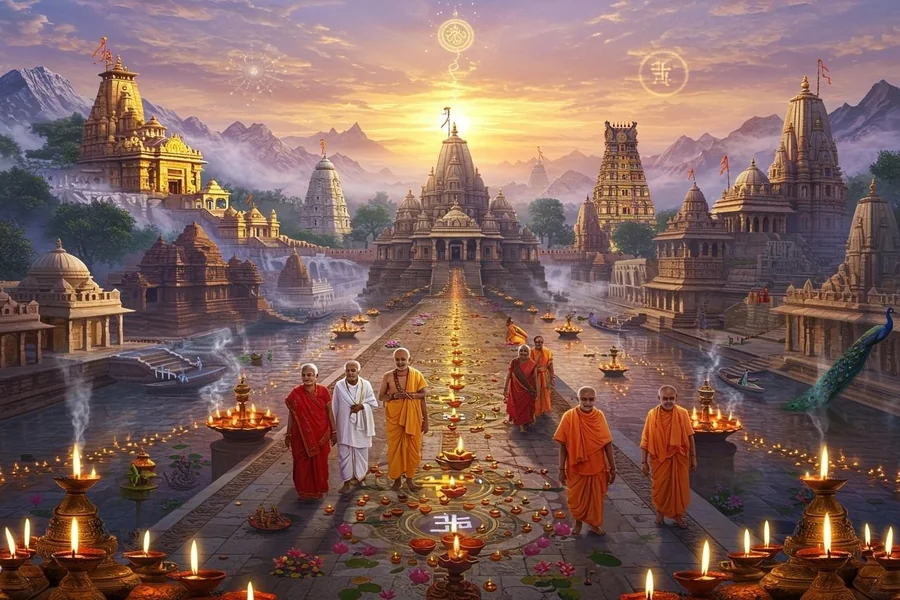
India is a land where faith breathes in every corner—through chants in ancient temples, the ringing of church bells, the rhythm of Sufi music, and the echo of sacred mantras along riverbanks. For thousands of years, India has drawn pilgrims, saints, and seekers of truth from across the world. Today, it continues to welcome travelers looking for spiritual fulfillment, cultural immersion, and historical exploration through the growing phenomenon of Religious Tourism in India.
From the snow-covered shrines in the Himalayas to coastal temples and desert mosques, India’s religious sites not only offer a journey through spirituality but also a deep dive into the country’s diverse heritage. Let’s explore how Religious Tourism in India is shaping travel, uniting cultures, and offering transformative journeys.
A Multifaith Spiritual Destination
What makes Religious Tourism in India unique is the peaceful coexistence of multiple faiths—Hinduism, Islam, Christianity, Sikhism, Buddhism, Jainism, Judaism, Zoroastrianism, and more. India is home to some of the world’s most sacred destinations for each of these religions.
Key Pilgrimage Sites Across Faiths:
- Hinduism – Varanasi, Rameswaram, Kedarnath, Badrinath, Puri, and the Char Dham Yatra are just a few of the countless sites.
- Islam – Ajmer Sharif Dargah in Rajasthan and Hazrat Nizamuddin Dargah in Delhi draw millions of Sufi followers.
- Christianity – Velankanni Church in Tamil Nadu and St. Francis Church in Kochi are important pilgrimage centers.
- Sikhism – The Golden Temple in Amritsar is one of the most visited religious sites globally.
- Buddhism – Bodh Gaya in Bihar, where Buddha attained enlightenment, is a major spiritual hub.
- Jainism – Palitana in Gujarat and Shravanabelagola in Karnataka are sacred to Jains.
India’s religious diversity gives travelers an opportunity to explore different beliefs and traditions in one journey.
The Rise of Religious Tourism in India
Over the past decade, Religious Tourism in India has seen a sharp rise, both among domestic and international travelers. People are no longer just seeking vacations—they’re looking for meaningful experiences that bring peace, introspection, and connection.
The Government of India has also recognized the potential of this segment, launching schemes like the PRASHAD (Pilgrimage Rejuvenation and Spiritual Heritage Augmentation Drive) to develop infrastructure at major religious sites and improve the overall experience for visitors.
Why People Choose Religious Tourism
Religious tourism isn’t just for the devout. Many travelers, regardless of faith, are drawn to sacred places for various reasons:
1. Spiritual Rejuvenation
Places like Rishikesh, Bodh Gaya, and Haridwar offer yoga retreats, meditation centers, and spiritual discourses that provide emotional healing and inner peace.
2. Cultural Immersion
Every religious site comes with its own rituals, music, food, dress, and traditions. Participating in a Ganga Aarti or walking in a procession during Navaratri allows travelers to dive into India’s rich culture.
3. Architectural & Historical Interest
Religious structures in India are marvels of art and architecture. From intricately carved temples to majestic mosques and colonial churches, these sites are a treasure trove for historians and photographers.
4. Festivals and Celebrations
Festivals like Kumbh Mela, Eid, Christmas, Diwali, Gurpurab, and Buddha Purnima are celebrated with grandeur, attracting travelers who want to witness India’s spiritual energy in full swing.
Top Religious Tourism Circuits in India
To streamline travel for pilgrims and spiritual tourists, several religious circuits have been developed across the country:
1. Char Dham Yatra (Uttarakhand)
One of the most significant pilgrimages in Hinduism, covering Yamunotri, Gangotri, Kedarnath, and Badrinath.
2. Buddhist Circuit
Covers Bodh Gaya (enlightenment), Sarnath (first sermon), and Kushinagar (Parinirvana), among others.
3. Jyotirlinga Circuit
Connects the 12 sacred Shiva temples across India, including Somnath, Kashi Vishwanath, and Rameswaram.
4. Ramayana Circuit
Follows the footsteps of Lord Rama across key destinations like Ayodhya, Chitrakoot, Nashik, and Rameswaram.
5. Sufi Circuit
Highlights key dargahs and Sufi shrines such as Ajmer Sharif, Nizamuddin Dargah, and Fatehpur Sikri.
Sustainable and Responsible Travel in Sacred Places
With the growing popularity of Religious Tourism in India, it becomes equally important to travel responsibly. Over-tourism, plastic waste, and crowding can harm both the sanctity and the environment of these places.
Here’s how to practice mindful religious tourism:
- Respect local customs and dress codes
- Avoid loud behavior or photography in prayer areas
- Do not litter or pollute water bodies
- Support local artisans and businesses
- Follow eco-friendly practices and choose green accommodations
The Economic and Social Impact
Religious tourism plays a vital role in boosting local economies. From transport operators and local guides to artisans and food vendors, an entire ecosystem thrives around sacred sites. It also fosters a sense of pride and preservation among local communities.
Moreover, religious tourism promotes harmony and understanding among diverse groups. When people from different backgrounds come together at these spiritual places, it fosters respect and appreciation for each other’s beliefs and traditions.
Modern Amenities with Spiritual Roots
To accommodate today’s traveler, many religious tourism destinations in India now offer:
- Well-connected transport facilities
- Budget and luxury stays near temples and shrines
- Guided tours and interpretation centers
- Yoga and wellness retreats in spiritual hubs
- Multi-language support for international tourists
These developments are transforming how people experience spirituality—making it more inclusive, comfortable, and accessible.
Conclusion
India is more than a geographical space—it’s a spiritual experience. Every temple bell, mosque call, church hymn, or gurdwara chant is a reminder of the country’s deep-rooted faith and unity in diversity.
Whether you’re seeking blessings, healing, cultural immersion, or historical exploration, Religious Tourism in India offers it all. It’s a journey of the soul that bridges the ancient with the modern, the spiritual with the tangible, and the personal with the universal.
So, embark on a sacred journey that goes beyond sightseeing. Discover the faith, folklore, and philosophy that make India not just a destination, but a pilgrimage of the heart.