

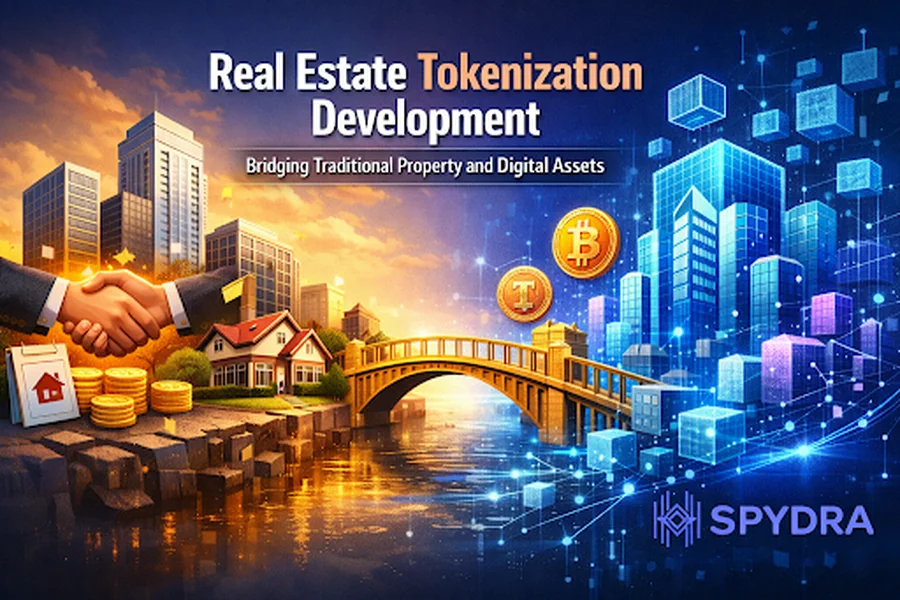
The global real estate market is enormous—valued at over $379 trillion in 2023, according to Savills—yet it remains highly illiquid and inaccessible for many investors. Meanwhile, blockchain adoption continues to surge, with more than $16 billion locked in tokenized real-world assets (RWAs) by 2024. Innovative platforms like Spydra are accelerating this shift by enabling secure, compliant, and scalable real estate tokenization development, effectively bridging traditional property ownership with digital assets. This convergence is unlocking liquidity, improving transparency, and reshaping how investors worldwide understand what is asset tokenization in modern real estate.
So, let’s break it down—what is asset tokenization, why does it matter, and how is it reshaping the real estate industry?
What Is Asset Tokenization?
Before diving deeper, let’s answer a common question: What is Asset Tokenization?
Asset tokenization is the process of converting ownership rights of a real-world asset into digital tokens on a blockchain. These tokens represent fractional ownership and can be bought, sold, or traded securely online.
In real estate, this means a property—such as an apartment complex or commercial building—gets divided into digital tokens. Each token represents a share of ownership, including economic rights such as rental income or capital appreciation.
Key features of asset tokenization include:
- Fractional ownership
- Immutable blockchain records
- Smart contract automation
- Faster and cheaper transactions
According to a Boston Consulting Group (BCG) report, the tokenized asset market could reach $16 trillion by 2030, with real estate being one of the largest contributors.
Why Real Estate Tokenization Development Matters
Traditional real estate investing often requires substantial capital, extensive paperwork, and limited liquidity. Real estate tokenization development tackles these challenges head-on.
1. Increased Liquidity
Tokenized properties enable investors to trade fractional shares of assets. Instead of waiting months to sell a property, owners can sell tokens in minutes on secondary marketplaces.
2. Lower Entry Barriers
Historically, real estate investments required tens or hundreds of thousands of dollars. With tokenization, investors can start with as little as $100, opening doors for retail investors globally.
3. Global Investor Access
Blockchain removes geographical barriers. Investors from Asia, Europe, or the U.S. can participate in the same tokenized property with minimal friction.
According to Deloitte, tokenization can reduce transaction costs by up to 30%, making property deals far more efficient.
How Real Estate Tokenization Works
Understanding the process helps clarify why this model is gaining traction. Here’s a simplified flow:
- Property Selection: A real estate asset is legally evaluated.
- Legal Structuring: The property is placed under an SPV (Special Purpose Vehicle).
- Token Creation: Blockchain-based tokens represent ownership shares.
- Smart Contracts: Automated contracts manage dividends, transfers, and compliance.
- Marketplace Trading: Investors buy, sell, or hold tokens digitally.
This seamless workflow highlights why real estate tokenization development is gaining momentum across commercial and residential markets.
Role of Blockchain in Real Estate Tokenization
Blockchain acts as the backbone of tokenized real estate. It ensures transparency, security, and trust.
Key blockchain benefits include:
- Transparency: Every transaction is recorded on a public ledger.
- Security: Cryptographic encryption protects ownership data.
- Automation: Smart contracts eliminate intermediaries.
Ethereum remains the most widely used blockchain for tokenization, while platforms like Polygon and Solana offer scalable alternatives. According to Electric Capital, more than 70% of tokenized real estate projects currently rely on Ethereum-based standards such as ERC-20 and ERC-721.
Benefits for Investors and Property Owners
Real estate tokenization development creates a win-win scenario.
For Investors:
- Portfolio diversification
- Passive income through rental yields
- Reduced risk via fractional ownership
For Property Owners:
- Faster fundraising
- Access to global capital
- Improved asset valuation
A World Economic Forum study suggests tokenization could unlock $1.4 trillion in additional real estate value by improving market efficiency.
Use Cases of Tokenized Real Estate
Tokenization isn’t just theoretical—it’s already happening.
- Residential Properties: Tokenized apartments in New York and Dubai
- Commercial Real Estate: Office spaces and shopping malls
- Hospitality: Hotels and resorts offering fractional investment
- REIT Alternatives: Blockchain-based real estate funds
Platforms like RealT and Brickblock already allow users to earn rental income through tokenized properties, proving the model works.
Challenges and Regulatory Considerations
While promising, real estate tokenization development isn’t without hurdles.
- Regulatory uncertainty: Laws vary across countries
- Investor education: Many still ask, “What is asset tokenization?”
- Market adoption: Traditional players resist change
However, regulators are catching up. The EU’s MiCA framework and SEC sandbox initiatives signal growing institutional acceptance.
The Future of Real Estate Tokenization Development
Looking ahead, the outlook is promising. As blockchain matures, tokenized real estate will likely integrate with DeFi, enabling lending, staking, and cross-border trading.
Experts predict that 10% of global real estate assets could be tokenized by 2030, dramatically reshaping property investment. With rising demand for digital assets, real estate tokenization is a powerful bridge between the physical and digital economies.
FAQs
What is Asset Tokenization in real estate?
It’s the process of converting property ownership into blockchain-based digital tokens that represent fractional shares.
Is real estate tokenization safe?
Yes, when backed by legal frameworks and secure blockchain platforms, it offers high transparency and security.
Who can invest in tokenized real estate?
Both retail and institutional investors can participate, subject to regulatory requirements.
Final Thoughts: A New Era for Property Investment
Real estate tokenization development is more than a trend—it’s a structural shift. By blending traditional property with digital assets, it democratizes access, boosts liquidity, and streamlines transactions. As awareness grows and regulations mature, tokenized real estate will likely become a cornerstone of the modern investment landscape.
In short, if you’re still asking what asset tokenization is, now’s the perfect time to explore it—because the future of real estate is already digital.