

Choosing a domain name doesn’t boil down to just creativity. It is a process that involves plenty of technical details, including picking the right domain extension.
To an industry outsider, the domain extension is something that often goes by unnoticed. However, it is also a subconscious sign of trust and brand identity.
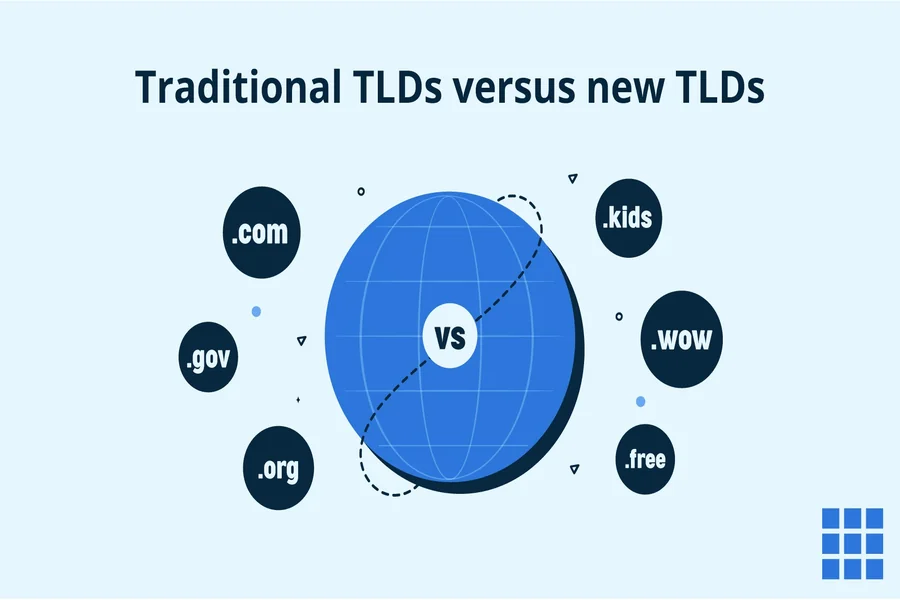
Among the countless options available today, three categories dominate the conversation: .com domains, alternative top-level domains (TLDs), and country code top-level domains (ccTLDs). Each comes with its advantages, challenges, and best-use scenarios.
This article explores the great domain debate and helps navigate which option may best suit your goals.
The Classic Choice: .com
The .com is the golden standard for the commercial side of the internet. Spaceship bulk search shows it is also the most popular domain extension in the world.
Many internet users recognise .com as the most trustworthy one, albeit that may not always be the case. Either way, it is a force to be reckoned with and an extension that remains popular and pricey.
Advantages of Using a .com Domain
Here are some things that may convince a company to use the .com domain:
- It is universally recognised across the globe. People naturally assume a website will end with .com, making it easier to remember.
- For a business of any kind, .com extension radiates trust. Users love seeing .com domains as they convey stability.
- .com is SEO-friendly. Although Google doesn’t care for domains, end-users do.
Disadvantages of .com Domains
Of course, .com extension is not perfect and comes bearing a fair share of disadvantages. The most obvious of them is the scarcity.
The popularity of the .com extension has led to high demand. Brands often have to make compromises, as well as prepare a hefty budget, if they wish to use .com domains.
The New Frontier: Alternative TLDs
TLDs include .io, .tech, .app, .studio and many others. They may sound and look generic, but such extensions can be a powerful tool in shaping a brand.
How is that possible? TLDs can easily make the brand sound more modern, fresh, and original.
Advantages of TLDs
What are the benefits of using the TLDs? We found plenty:
- TLDs provide a greater availability, thus making finding a memorable domain much easier.
- They also provide niche relevance. Choosing between .tech, .shop, and others can help add an extra keyword without much effort.
- TLDs are also more modern than .com. They are favoured among startups and signal innovation.
Disadvantages of TLDs
The main disadvantage of TLDs is that consumers don’t recognise them as easily as the .com domain. Some may be hesitant to click the link simply because of the extension.
Many people perceive TLDs as less credible than .com. Subsequently, it is preferable among the tech crowds, rather than the mainstream audience.
Finally, there are the renewal fees. Speciality domains come with premium pricing compared to traditional options.
The Local Advantage: ccTLDs
The last option is using a ccTLD. It is a country-coded top-level domain that is tied to a specific country.
While originally meant for national use, some have taken on broader appeal. For instance, the .tv (Tuvalu) is often used by media and .me (Montenegro) for personal branding.
Advantages of ccTLDs
It is time to look into the advantages of using ccTLDs:
- They are immensely popular on the local level. Consumers are more likely to engage with websites that use their country’s extension.
- They support geo-targeting in SEO. Search engines associate ccTLDs with specific regions, making them effective for local marketing.
- Some of them are ideal for creative branding.
Disadvantages of ccTLDs
The main disadvantage of ccTLDs is limited global reach. Potential visitors may think the service or goods on the website are available in limited markets.
Some countries require proof of local presence or citizenship to register their ccTLD. Since ccTLDs depend on national registries, policies can change unexpectedly.
How to Choose the Right Domain?
The decision between .com, TLDs, and ccTLDs ultimately depends on your audience, goals, and resources. Not every domain is suitable for everyone.
If you target a global audience, the .com is a logical choice. TLDs, on the other hand, are suitable for niche brands and companies, while ccTLDs work best when operating locally.
Another thing to consider is the brand. While more conventional and traditional brands may thrive with a .com domain, new and innovative companies will benefit from TLDs.
Additionally, consider long-term planning and cost. More expensive domains are often nice, but they will swallow up the whole budget.
The great domain debate doesn’t have a single winner. Ultimately, the best strategy may involve a mix.
Some brands will have to secure the .com for global recognition, while also registering relevant TLDs or ccTLDs to protect the brand. In today’s crowded digital space, the right domain is a statement of identity and purpose.