

Introduction
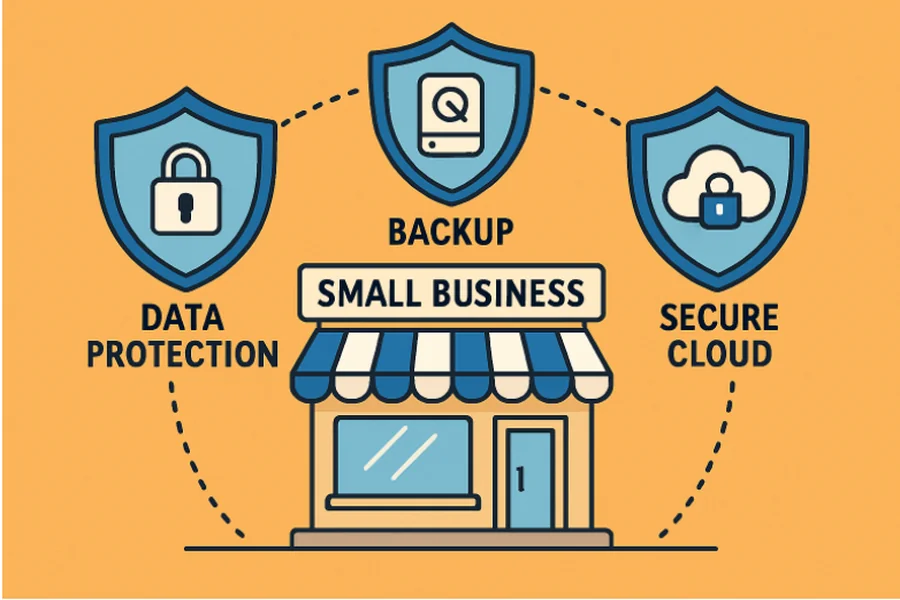
Small businesses have become low-hanging fruit for cybercriminals in the rapidly evolving digital environment. As data breaches and ransomware attacks soar yearly, investing in modern data protection practices has become advisable and imperative. Establishing a multi-layered defense will better protect customer trust, safeguard sensitive data, and keep operations running smoothly. Leveraging the right DR solutions can provide business continuity and fast recovery when the unexpected strikes, forming the foundation of any effective data security strategy.
While cybersecurity concerns can seem overwhelming to small business owners, focusing on actionable controls like multi-factor authentication (MFA), endpoint protection, data backups, and encryption yields meaningful improvements without excessive complexity or cost. Comprehensive planning also involves staying up to date on data protection regulatory requirements and having a measurable response plan if a breach occurs. Businesses that address these elements head-on are best positioned to thrive in today’s risk-heavy climate.
Understanding the Threat Landscape
The security landscape facing small businesses has shifted dramatically. Today, companies of all sizes capture and store valuable information—making them lucrative targets for attackers looking for vulnerable entry points. In 2025 alone, cyber breaches directed at small organizations spiked by more than 50%, and the pace of attacks is expected to continue rising. Most breaches now involve small firms that lack adequate security controls, and the financial aftermath, including regulatory fines, lost revenue, and damage to brand reputation, can be crippling.
Data theft, ransomware, and direct financial fraud are also on the rise. A single phishing email, if successful, can grant cybercriminals access to sensitive business systems. As attackers deploy increasingly sophisticated techniques, traditional “set and forget” antivirus defenses are no longer sufficient.
Implementing Multi-Factor Authentication
Multi-factor authentication (MFA) is a straightforward yet powerfully effective means of preventing unauthorized logins. It thwarts attackers even if passwords are compromised in a breach by requiring two or more verification steps—such as a password plus a unique code sent to a trusted device. This simple method has stopped countless account takeovers and is recommended by global cybersecurity agencies. For small businesses, implementing MFA across email, cloud storage, and internal tools delivers a high ROI in risk reduction.
Deploying Endpoint Protection
The modern workforce relies on laptops, smartphones, and home offices more than ever. This decentralization can leave security gaps, especially if personal devices aren’t correctly managed. Endpoint protection solutions, such as Endpoint Detection and Response (EDR), constantly monitor, detect, and respond to threats across connected devices. These systems go beyond traditional antivirus by analyzing behavior, isolating compromised endpoints, and preventing malicious code from spreading across the network. Deploying EDR ensures that employees benefit from consistent security oversight regardless of where they log in.
Regular Data Backups and Encryption
Routine data backups are a business’s last defense against ransomware events or accidental deletion. Backups should follow the 3-2-1 rule: three copies, on two different media types, with one stored offsite or in the cloud. Using disaster recovery solutions makes restoration faster and more reliable during an attack. Equally crucial is encrypting sensitive data at rest (on drives or servers) and in transit (as it moves between locations). Encryption turns data into unreadable code for anyone without access to the decryption key, drastically minimizing exposure if a breach occurs. Ensure encryption keys are stored securely and separately from the encrypted data.
Staying Compliant with Data Protection Regulations
Compliance requirements like the General Data Protection Regulation (GDPR) and the California Consumer Privacy Act (CCPA) apply to companies that collect or handle personal information, regardless of size or industry. Non-compliance can lead to stiff penalties and reputational harm. Staying up to date with changing privacy laws is essential; appoint someone internally to oversee compliance and seek legal counsel for complex concerns. Customize your privacy practices to reflect the scope of your data collection and processing activities.
Engaging External Security Expertise
Very few small businesses have the luxury of an in-house cybersecurity team. Partnering with managed service providers (MSPs) or cybersecurity consultants allows small firms to access up-to-date expertise in malware defense, vulnerability assessments, and security training. These partners can also oversee network monitoring, conduct regular security audits, and recommend the right technology stack to match your business needs. Outsourcing security is often more cost-effective than managing it in-house, particularly for businesses looking to scale securely.
Developing a Breach Response Plan
No system is invulnerable, so preparation is crucial. A breach response plan should identify a response team, outline specific steps to notify customers and regulators, and detail processes for containing and remediating threats. Conduct mock drills annually to ensure all staff know their roles during an incident. Regular testing and updating of this plan enable businesses to act swiftly and minimize impact if a breach does occur.
Conclusion
Small businesses face significant risks in the digital age, but proactive planning and the right mix of technology can make a world of difference. By understanding the evolving threat landscape, employing modern security controls like MFA and endpoint protection, adhering to compliance standards, seeking external security advice, and maintaining a strong breach response plan, small businesses can effectively reduce their attack surface and protect their data and customers’ trust. Leveraging proven resources and partners for disaster recovery solutions is a strong step toward enterprise-level resilience on a small business budget.