
A decade ago, starting a jewelry brand often meant investing heavily in inventory, production, and retail distribution before making a single sale. Today, the landscape looks very different. Consumers are increasingly drawn to affordable, versatile jewelry they can wear every day, creating opportunities for smaller brands to enter the market with focused collections and clear positioning.
At the same time, access to experienced manufacturing partners has become much easier. Reliable custom jewelry manufacturers, such as UVARA Jewelry, have made it possible for emerging brands to develop collections without the massive upfront commitments that were once common.
The brands finding success today aren't necessarily launching hundreds of products. They're building around a clear concept, a defined audience, and a collection designed to meet genuine customer demand.
Start With a Clear Customer in Mind
One of the biggest mistakes new jewelry brands make is trying to appeal to everyone. While a broader audience may sound attractive, it often results in a collection that lacks a clear identity.
Before developing designs or selecting materials, define exactly who the collection is for. Consider the customer's lifestyle, fashion preferences, shopping habits, and budget. A brand targeting office professionals may focus on understated sterling silver pieces that transition easily from work to social settings. A collection aimed at younger trend-conscious shoppers might lean toward bold brass designs that reflect seasonal styles.
Having a clear customer profile influences nearly every business decision, from product development and pricing to branding and marketing. It also helps create a collection that feels relevant rather than generic.
The clearer the audience, the easier it becomes to build a jewelry line that resonates with the right buyers.
Build a Small Collection Around One Strong Idea
It's easy to assume that launching with more products will attract more customers. In practice, a smaller collection often creates a stronger first impression.
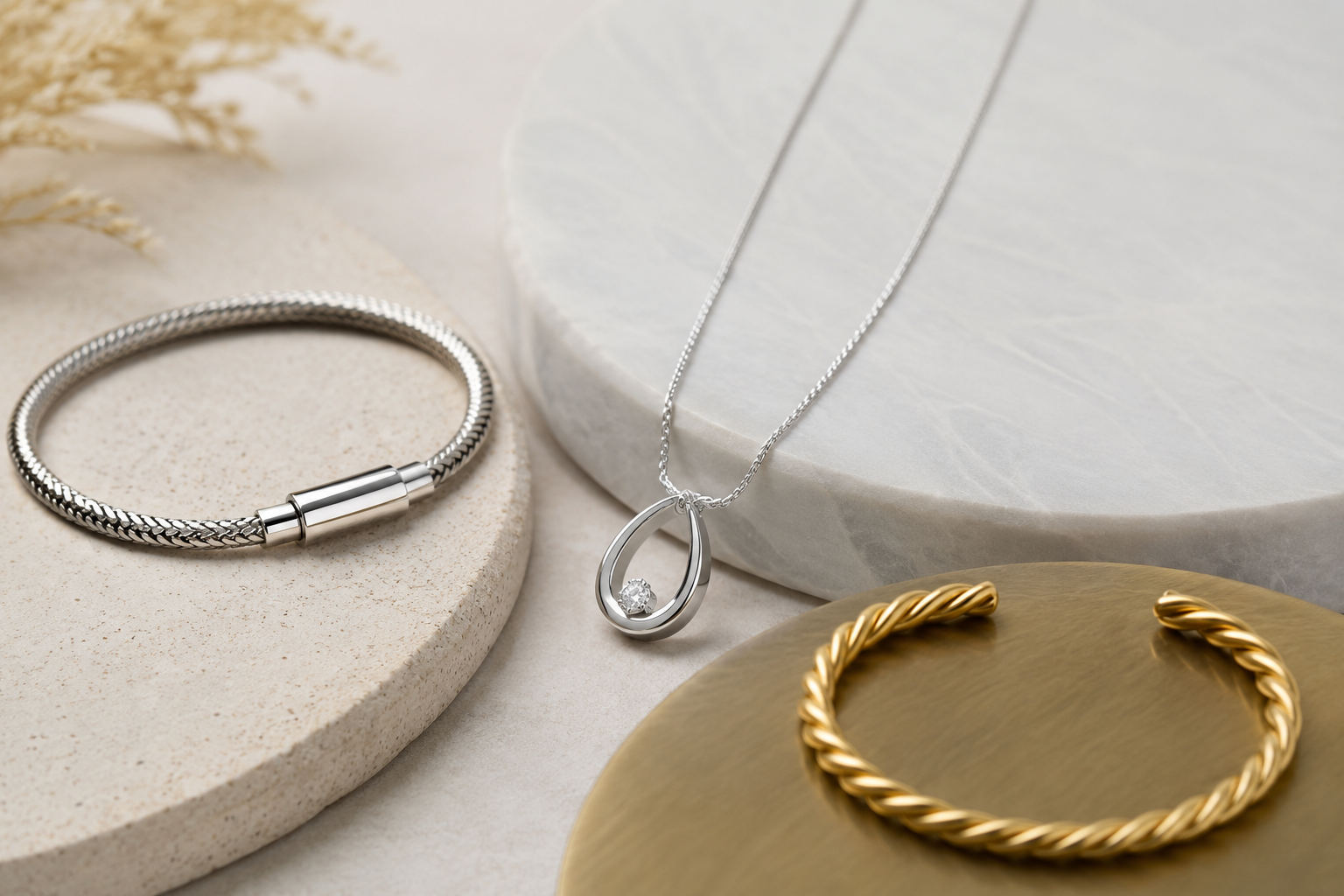
Rather than introducing dozens of unrelated pieces, focus on a concept that connects the collection. This could be a range of minimalist stainless steel essentials designed for daily wear, a series of timeless sterling silver staples, or a selection of fashion-forward brass statement pieces. The common thread should be immediately recognizable.
A cohesive collection does more than strengthen brand identity. It can also encourage customers to purchase multiple pieces that naturally complement one another. Someone who purchases a necklace, for example, may be more inclined to add matching earrings or rings when the overall aesthetic feels consistent.
For many new brands, five to ten carefully selected products are enough for an initial launch. Starting small makes it easier to test demand and refine future collections based on real customer feedback.
Choose Materials That Match Your Market
Material selection plays a major role in shaping both customer perception and pricing strategy. The right materials should align with what the target audience values most.
Stainless steel remains a popular choice for customers seeking durability, affordability, and low-maintenance wear. 925 sterling silver appeals to buyers who appreciate classic styles and long-term versatility. Brass, meanwhile, offers flexibility for creating trend-driven designs while keeping production costs manageable.
Many consumers shopping for daily-wear jewelry aren't focused on luxury materials. They're looking for pieces that fit comfortably into their lifestyle, hold up well over time, and offer good value for the price.
When materials support both the product concept and customer expectations, the collection is more likely to stand out in a competitive market.
Find the Right Manufacturing Partner Early
A strong design concept can only go so far without reliable production behind it. That's why choosing a manufacturing partner should happen early in the planning process rather than after the collection has been finalized.
Manufacturing decisions directly affect product quality, costs, delivery timelines, and long-term scalability. Before selecting a supplier, ask questions about minimum order quantities, customization options, quality control procedures, and production lead times. It's also wise to request samples to evaluate craftsmanship, finishing quality, and overall consistency before placing larger orders.
Many growing brands choose to work with experienced manufacturers such as UVARA Jewelry because established suppliers can often provide valuable insight into material selection, design feasibility, and efficient production planning.
The right partner does more than produce jewelry. They help create a foundation for sustainable growth.
Test Before You Scale
Many founders delay launching because they want every detail to be perfect. The reality is that some of the most successful jewelry brands learn and improve through the launch process itself.
Starting with a limited release reduces financial risk while providing valuable information about customer preferences. This could involve offering a small collection, gathering feedback from sample buyers, or using pre-orders to measure demand before increasing production.
Customer responses often reveal insights that can't be predicted during the planning stage. Certain designs may outperform expectations, while others generate less interest than anticipated. Those lessons can guide future product development and marketing decisions.
Rather than trying to perfect every aspect of the collection before launch, focus on learning from real customer behavior and refining the brand over time.
Create a Brand Experience, Not Just a Product Line
By the time the collection is ready, the products themselves are only part of the equation. How they're presented can be just as important.
Branding, photography, packaging, and messaging all contribute to how customers perceive a jewelry business. When these elements feel consistent, they help create a memorable and professional image that customers can trust.
This is particularly important for accessible jewelry brands. Thoughtful packaging, high-quality product photography, and a consistent visual identity can make affordable pieces feel polished and desirable without dramatically increasing costs. Manufacturers like UVARA Jewelry are often involved in packaging and customization discussions during product development, making brand consistency easier to maintain from the start.
Customers may discover a brand because of a product, but they're more likely to return because of the experience surrounding it.
Keep Your First Launch Simple
Launching a jewelry line doesn't require an extensive catalog or a large upfront investment. More often, success comes from understanding the target audience, building a focused collection, selecting materials that fit the market, and working with dependable manufacturing partners.
Every launch provides valuable insight into customer preferences and buying behavior. The brands that grow successfully aren't necessarily the ones that introduce the most products. They're the ones that learn quickly, adapt to their audience, and continue improving with every collection they release.