
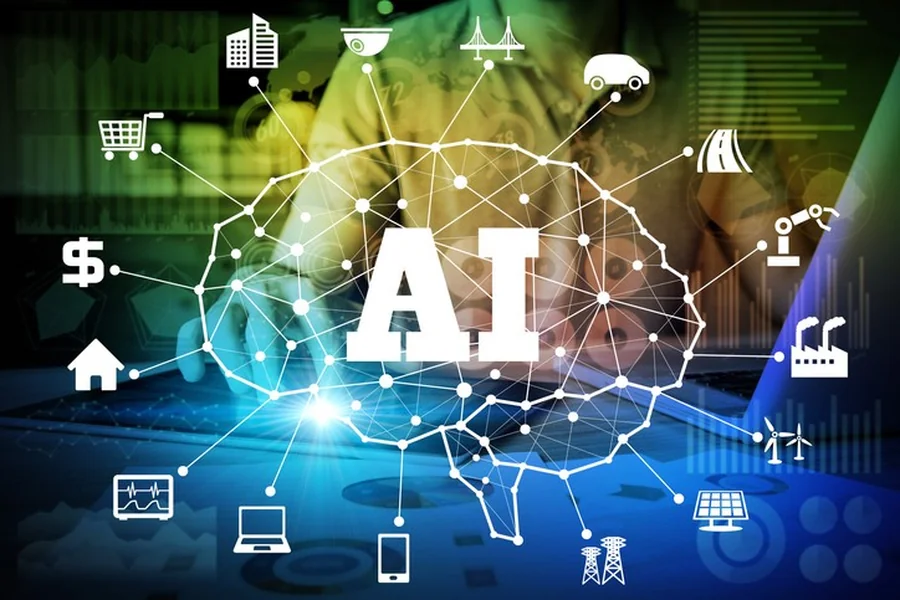
From healthcare and finance to entertainment and logistics, AI is transforming industries by offering unprecedented efficiency, predictive insights, and automation. Organizations worldwide are embracing AI to stay competitive, innovate faster, and create value in ways that were previously unimaginable.
At the heart of this revolution is the growing role of specialized facilities like the AI Lab, where researchers, engineers, and data scientists collaborate to design, test, and refine algorithms that drive intelligent solutions. These labs have become the crucibles of innovation, pushing the boundaries of machine learning, natural language processing, and computer vision. In addition to developing new technologies, AI Labs often focus on solving complex societal challenges, from disease prediction to climate modeling, demonstrating that AI can be both a tool for profit and a force for good.
AI Cloud Computing: Powering Scalable Innovation
One of the key enablers of AI’s rapid growth is the advent of AI cloud computing. Traditional computing infrastructure often struggles to support the massive datasets and high-performance requirements of modern AI applications. Cloud-based AI platforms, however, provide scalable storage, powerful GPUs, and seamless access to advanced computing resources, allowing companies of all sizes to deploy AI models without the need for costly on-premises hardware. This democratization of AI infrastructure has opened doors for startups, SMEs, and academic institutions to compete with large enterprises on equal footing.
AI is also changing how companies understand and interact with their customers. Predictive analytics, powered by sophisticated algorithms, enables companies to anticipate trends, personalize experiences, and optimize operations. Retailers can forecast demand and manage inventory more efficiently, while financial institutions can detect fraud in real-time, enhancing security and customer trust. Moreover, AI-driven recommendation systems are shaping the entertainment industry, ensuring that content delivery is tailored to individual preferences, thereby boosting engagement and satisfaction.
AI Transforming Healthcare and Medical Research
Healthcare, one of the most critical sectors, has seen remarkable transformations through AI adoption. Diagnostic tools powered by machine learning can analyze medical images with high accuracy, assisting doctors in detecting diseases at early stages. Predictive models can identify patients at risk of chronic conditions, enabling preventive care strategies that save lives and reduce healthcare costs. In research, AI accelerates drug discovery by simulating molecular interactions and predicting potential outcomes, significantly reducing the time required for bringing new medicines to market.
Education is another arena undergoing profound change due to AI. Intelligent tutoring systems, adaptive learning platforms, and AI-powered assessments provide students with personalized learning experiences, addressing individual strengths and weaknesses. Automating administrative tasks allows educators to focus more on teaching and mentoring. The integration of AI into education also prepares students for a technology-driven world, equipping them with critical skills to navigate the future workforce.
Ensuring Responsible and Ethical AI Adoption
Now, bias in AI algorithms, data privacy, and transparency are challenges that organizations must address to ensure responsible AI adoption. Regulatory frameworks are evolving globally to mitigate risks, and many companies are establishing AI ethics committees to oversee model development and deployment. Transparent algorithms, robust data governance, and inclusive datasets are essential to building AI systems that are fair, accountable, and beneficial to society as a whole.
Sustainability is yet another frontier where AI can make a meaningful impact. AI-powered systems optimize energy usage in industries, smart cities, and transportation networks, reducing waste and carbon emissions. In agriculture, AI aids in precision farming by analyzing soil conditions, predicting weather patterns, and recommending efficient irrigation practices. Such applications not only enhance productivity but also promote environmentally responsible practices that address pressing global challenges.
Collaboration is key to unlocking AI’s full potential. Partnerships between tech companies, academic institutions, and government agencies are fostering innovation ecosystems that accelerate research and development. By sharing data, knowledge, and resources, these collaborations enable breakthroughs that no single entity could achieve alone. Cross-disciplinary approaches, combining AI with fields like robotics, biotechnology, and materials science, are driving the creation of entirely new industries and redefining what is possible in the digital age.
The Future of AI: Transforming Everyday Life
Looking ahead, the trajectory of AI adoption suggests a future where intelligent systems are seamlessly integrated into every aspect of human life. From autonomous transportation and smart cities to personalized healthcare and education, AI will continue to enhance human capabilities while addressing complex societal challenges. Organizations that invest in AI research, infrastructure, and talent will be well-positioned to thrive in this rapidly evolving landscape, leveraging insights that were once beyond reach.
The AI revolution isn’t simply a technological phenomenon, rather it is reshaping economies, industries, and societies. Facilities like AI Labs, coupled with the power of AI cloud computing, are enabling innovators to push boundaries and create solutions that were once unimaginable. As companies harness the potential of AI responsibly and ethically, the promise of a smarter, more efficient, and inclusive world becomes increasingly attainable. The future belongs to those who embrace AI not merely as a tool, but as a catalyst for innovation and progress.