

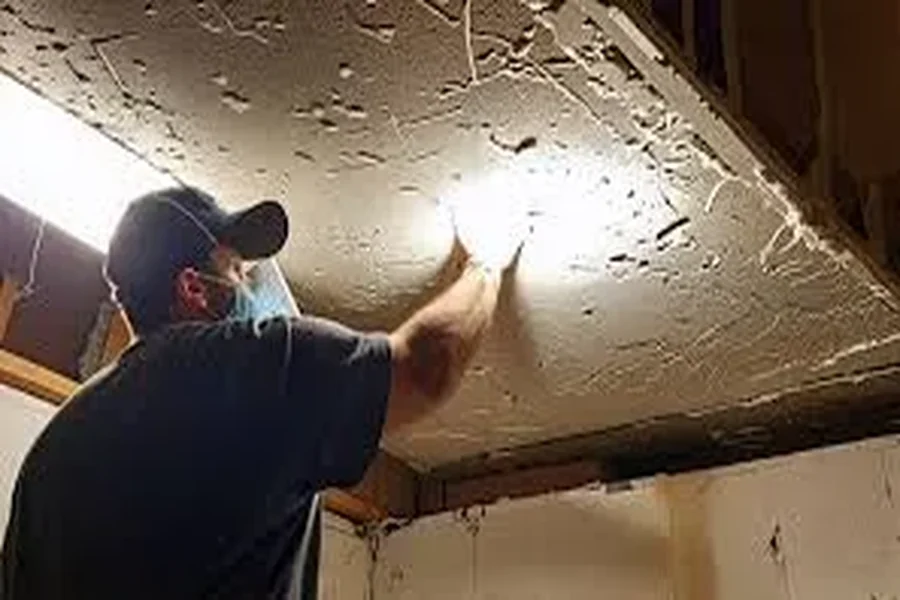
You’re halfway through a home project. The plasterboard’s down. The wall’s open. And there it is—something fibrous, grey, and worrying.
Suddenly, the word “asbestos” creeps into your mind. And everything stops.
It’s natural to panic. But let’s take a breath.
Because there’s a right way to deal with this. And it starts with not doing anything just yet.
First Things First – Don’t Touch It
If you’ve found something suspicious in your walls, the most important thing is this:
Do not drill, cut, sand, or rip it out.
Asbestos is dangerous only when disturbed. That’s when it breaks down into dust. The tiny fibres get into the air. You breathe them in. And that’s where the trouble starts.
But if you leave it alone for now, you’ve bought yourself some time—and some safety.
What Might Asbestos Look Like in a Wall?
You won’t always know by looking. But asbestos was commonly used in:
- Insulation board inside partition walls
- Ceiling linings and soffits
- Fireproof panels around boilers and heaters
- Textured wall coatings (like Artex)
- Cement sheeting in older extensions or sheds
It could be hidden behind layers of newer material. Or it might be exposed if you’re renovating.
It might look like cement. Or plaster. Or cardboard.
That’s why guessing is a bad idea.
What to Do Next
Stop work immediately
Put the tools down. Clean up the area gently without disturbing the material further. Close the door and avoid the room if possible.
Get professional advice
Contact a qualified asbestos surveyor. They’ll come to inspect the material and take samples if needed.
Wait for the lab results
The samples are tested in a UKAS-accredited lab. You’ll usually get results within a few days.
If it turns out to be asbestos, your next steps will depend on where it is, how damaged it is, and whether you plan to leave it alone or carry on with building work.
Does It All Have to Be Removed?
Not always.
If the asbestos is sealed inside a wall and in good condition, it may be safer to leave it in place. You’ll just need to note where it is and make sure it’s not disturbed in future.
But if you’re renovating—or if the material is crumbling—it will likely need to be removed by a licensed professional.
Never try to do it yourself.
Never let an untrained builder do it either.
Handling asbestos the wrong way is a serious health risk—and in some cases, a criminal offence.
What If You’ve Already Been Exposed?
Take a step back. A one-time, brief exposure doesn’t automatically mean you’re going to get sick.
Most asbestos-related illnesses come from long-term or repeated exposure, often in workplaces where people dealt with it regularly.
Still, if you’re concerned, speak to your GP. Let them know what happened. They may add a note to your records in case symptoms develop later in life.
How Much Will Removal Cost?
It depends on the size and type of material. Removing a single panel might cost a few hundred pounds. Bigger jobs involving full walls or multiple rooms can reach into the thousands.
That said, removal is a one-time cost that protects your health, your home, and your peace of mind.
Trying to dodge it can end up costing far more—especially if contamination spreads.
Legal Things You Should Know
If you’re a homeowner, there’s no legal requirement to remove asbestos unless you plan to disturb it.
But if you’re a landlord, you’re responsible for managing asbestos in the property. You must protect tenants from exposure, which usually involves a management survey.
And if you’re doing work that might expose asbestos, you’re legally required to carry out a refurbishment and demolition survey before work begins.
How to Prevent Trouble in Future
- Always check the age of a property before you start work
- Get an asbestos survey done before any renovations
- Tell builders where asbestos is (if known) before they start
- Never cut corners to save time or money
A survey costs less than the average carpet. And it could save you from a lifetime of worry—or worse.
The Bottom Line
Asbestos in your walls isn’t something to ignore.
But it’s also not something to panic about if you act sensibly.
- Leave it alone.
- Get it tested.
- And deal with it the right way.
Because your home should be a place of comfort—not a hidden threat.