
Why Remix Videos Feel So Natural Now
I used to think every good video had to start with a fresh shoot. New idea, new footage, new edit. That still works, but it is not how a lot of online creators actually move anymore.
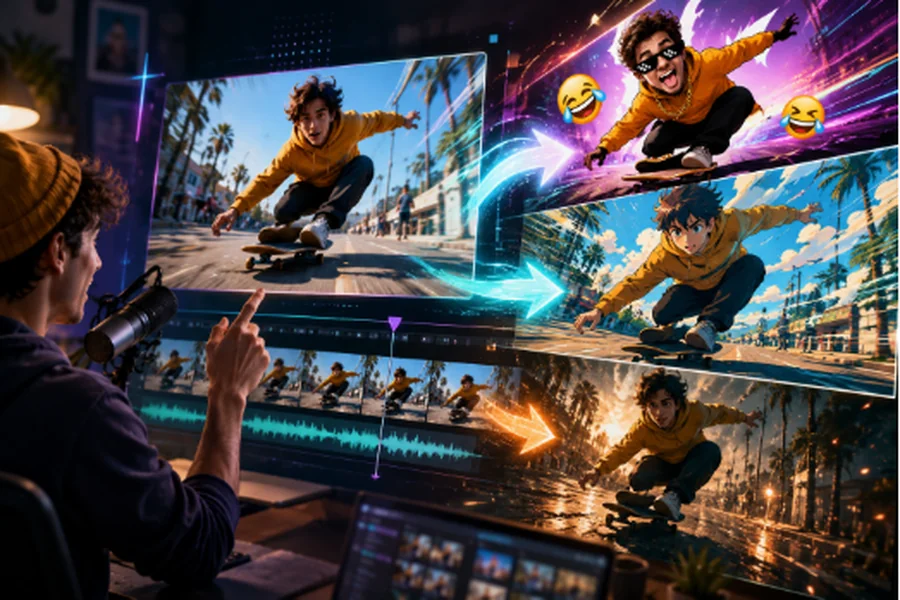
More often, creators are reworking what they already have. An old selfie video becomes a meme. A travel clip gets a new visual style. A product demo turns into a more cinematic short. A simple talking clip becomes a character-style edit.
That is the rise of remix videos. It is not just about saving time. It is about giving old footage another chance to work.
GoEnhance AI is an AI creative platform that helps users transform images and videos into stylized visual content, including face swaps, video-to-video edits, and short-form creative experiments.
One of the most recognizable remix formats is creating face swap videos for parody clips, meme edits, character roleplay, creator experiments, and entertainment-focused short videos.
Online Video Is Becoming More Remix-Based
Short-form platforms reward speed, timing, and format awareness. That changes how creators think.
A clip does not have to be perfect to be useful. It just needs a strong angle. A funny reaction, a clear pose, a simple dance, a good facial expression, a clean product shot, or a recognizable scene can all become remix material.
I see this most often in content like:
| Original Material | Remix Possibility |
| Old selfie video | Meme or character edit |
| Dance clip | Stylized visual transformation |
| Product demo | More cinematic product short |
| Pet video | Funny animated-style clip |
| Travel footage | Fantasy or postcard-like edit |
| Reaction clip | Social media meme format |
| Cosplay video | Character-based transformation |
The old video gives the remix its structure. AI helps change the surface, style, or identity of the clip.
Why Reworking Old Clips Saves More Than Time
Saving time is the obvious benefit, but it is not the only one.
Old clips already have something useful: natural movement. That is hard to fake. A real reaction, real body motion, or real camera movement gives the final video a stronger base than starting from a blank prompt.
When I use an existing clip, I am not asking the tool to invent everything. I am asking it to reinterpret something that already exists.
That is why remix workflows can feel more controllable than pure text-to-video generation. The original clip provides timing, pose, rhythm, and framing. The AI changes the look.
Face Swap As A Remix Format
Face swap is one of the easiest remix formats to understand because the transformation is obvious. The structure of the video stays familiar, but the identity changes.
That can be funny, useful, or risky depending on how it is used.
For harmless entertainment, it can work well in parody clips, cosplay-style edits, friend-group jokes, reaction videos, and meme formats. For creators, it can also help test character concepts or explore how a role might feel with a different face.
But I am careful with this category. I only recommend using your own face, a consenting friend’s face, or materials you clearly have the right to use. Face swap should not be used to impersonate people, mislead viewers, damage someone’s reputation, or create sensitive content without permission.
The technology is fun, but the responsibility sits with the person publishing the clip.
Video-To-Video As A Style Remix
Face swap changes identity. Style remix changes the visual world.
A video to video workflow takes the remix idea further by keeping the original motion while changing the visual style, mood, or artistic direction of the clip.
That makes it useful for creators who already have a usable clip but want a different look. For example:
| Original Clip | Possible Style Remix |
| Dance video | Anime-style or cartoon-style version |
| Product clip | Cinematic or futuristic look |
| Travel clip | Dreamy fantasy atmosphere |
| Pet video | Cute animated short |
| Fitness clip | High-energy social video style |
| Cosplay clip | Comic or game-inspired style |
This is where old footage becomes more flexible. A single clip can be tested in several visual directions before the creator decides what fits the platform.
What Kind Of Clips Work Best For Remixing?
The best remix clips are usually simple.
I prefer one main subject, clean motion, decent lighting, and a background that does not fight the subject. If the clip is too crowded, too blurry, or too chaotic, the remix often becomes unstable.
Good candidates include:
- One-person talking clips
- Front-facing camera videos
- Short dance clips
- Clean product shots
- Simple travel footage
- Cosplay clips
- Pet videos
- Reaction clips
I avoid clips where people move across each other too quickly. I also avoid videos with tiny text, complex logos, or fast hand movement if accuracy matters.
AI can do a lot, but it still works better when the input gives it a clear job.
Remix Ideas For Social Media Creators
The strongest remix idea usually starts with a simple question: what is the new joke, mood, or style?
Here are a few ideas I would actually test:
| Creator Type | Remix Idea |
| Meme creator | Turn a reaction clip into a face swap parody |
| Influencer | Rework an outfit video into a stylized short |
| Small business owner | Make a product demo feel more cinematic |
| Gamer | Turn a webcam clip into a character-style edit |
| Fan creator | Create anime-inspired or comic-style edits |
| Pet account owner | Turn a pet clip into a playful animated short |
The key is not to use AI just because it is available. The remix needs a reason. A stronger style, a clearer joke, a better hook, or a format that fits the platform.
Why The Best Remix Still Needs A Human Idea
AI can change the look of a clip, but it cannot decide why the clip should exist.
That part still belongs to the creator.
Before making a remix, I usually ask myself:
- What is the viewer supposed to feel?
- Is the clip funny, stylish, useful, or surprising?
- Does the new version improve the original?
- Is the transformation clear within the first few seconds?
- Would I still understand it without reading a long caption?
This matters because a lot of AI edits look interesting but feel empty. They have style, but no idea. The best remix videos still have a human reason behind them.
What To Check Before Publishing Remix Videos
Publishing AI-edited videos needs more care than people sometimes admit.
Before posting, I check:
- Do I own or have permission to use the source clip?
- Are all visible faces allowed to appear?
- Could the edit mislead viewers?
- Does the platform allow this kind of content?
- Are there watermarks or license restrictions?
- Does the final export look clean enough?
- Are faces, hands, and important details stable?
- Is the commercial usage situation clear?
This is especially important if the video is used for ads, brand accounts, or public campaigns. A private joke between friends is one thing. A published branded video is another.
The Difference Between Fun Remix And Misleading Edit
There is a line between creative remix and misleading content.
A fun remix is usually clear about being edited. It feels like parody, stylization, character play, or visual experimentation. A misleading edit tries to make viewers believe something false.
That difference matters more now because AI edits are becoming easier to make.
I avoid using remix tools around sensitive news, politics, real public figures, or situations where viewers may misunderstand the context. Even when the edit is technically possible, that does not mean it is a good idea.
For normal creator content, I prefer transparent use: make it obvious that the video is stylized, edited, or fictional when needed.
Common Mistakes I See Beginners Make
The most common mistake is using bad input footage and expecting the tool to fix everything.
Blurry clips, crowded scenes, fast motion, poor lighting, and unclear subjects usually lead to weaker results. Another mistake is writing vague prompts like “make it cool.” That gives the system too much room to guess.
I also see people publish too quickly. They look at the first frame, like the style, and ignore the rest of the video. That is risky. AI video can look good in one moment and break in another.
I always watch the full output before using it.
Conclusion
The rise of AI remix videos makes sense because creators already have more footage than they use. Old clips can become new formats, new jokes, new styles, and new social posts.
But the best remix is not just a technical transformation. It still needs judgment. The creator has to choose the right clip, respect permissions, avoid misleading edits, and shape the final idea.
AI can make remixing faster and more flexible. The creative responsibility still stays with the person who hits publish.