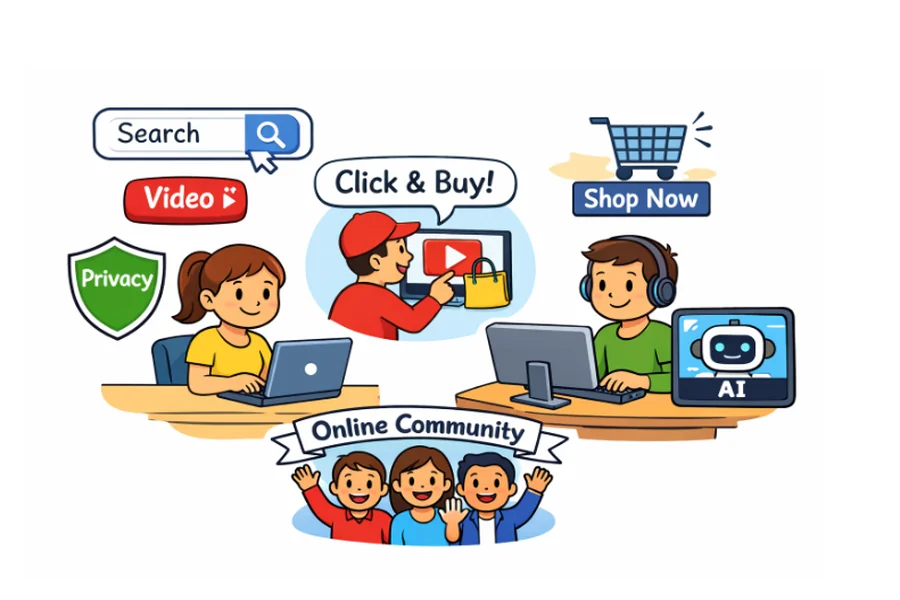
As the digital landscape continues to evolve, staying informed about emerging trends is crucial for marketers aiming to maintain a competitive edge. This article explores the top digital marketing trends in 2026, providing insights to help businesses adapt and thrive.
1. Conversational Search Reshapes SEO
Search behavior is shifting as users increasingly pose full questions to search engines. This change necessitates content that directly answers these queries, enhancing visibility in AI-driven search results. For instance, Google’s AI Overviews prioritize concise, authoritative responses over traditional keyword optimization.
Moreover, conversational search is pushing brands to rethink their entire content strategy. Creating topic clusters and FAQ-rich pages will become essential for ranking in both traditional and generative AI search results. Websites will need to feature more dynamic, conversational elements with interactive widgets and voice-ready interfaces, optimizing for not only text but voice and visual query inputs as well. This influences site architecture and user experience design, creating a more integrated, question-and-answer focused digital presence.
2. Video Commerce Becomes a Core Revenue Channel
Short-form and live videos are transforming into transactional platforms. Social media channels now integrate shopping features, allowing users to purchase products directly from videos. Brands should create interactive video content with embedded purchase options to capitalize on this trend.
The future of video commerce is also tied to emerging technologies such as augmented reality (AR) try-ons and shoppable livestreams hosted by influencers. Brands are experimenting with gamified video experiences, real-time Q&A sessions, and shoppable product showcases, blending entertainment and retail into a seamless journey. Metrics for success will shift beyond engagement to include conversion rates, click-through performance, and direct attribution to sales events captured in video analytics.
3. Privacy-First Data Strategies Gain Importance
With the decline of third-party cookies and stricter privacy regulations, businesses must focus on collecting and utilizing first-party data. Developing robust customer data platforms and obtaining explicit user consent are essential steps to maintain effective marketing strategies.
In addition to compliance, privacy-first strategies signal trustworthiness, which can differentiate brands in crowded markets. Transparent data collection policies, customizable consent preferences, and user dashboards for data management will become best practices. Marketers will increasingly harness zero-party data, like information proactively shared by users, such as preferences or purchase intentions, to personalize experiences without invading privacy.
4. Retail Media Networks Go Mainstream
Retail media networks (RMNs) are becoming integral to brand media planning. By leveraging first-party purchase data, RMNs offer a full-funnel approach, linking exposure to actual sales. Brands should integrate RMNs into their marketing strategies to enhance ROI.
As major retailers expand their media offerings, brands now have precise targeting capabilities within retail ecosystems, including sponsored product placements, display advertising, and in-app promotions. Sophisticated analytics tools allow for better attribution, enabling ongoing campaign optimization. RMNs are also fostering collaborations between brands, sharing anonymized audience insights for cross-promotion, which increases campaign effectiveness and shared value.
5. AI Becomes the Marketing Operating System
Artificial intelligence is now central to marketing operations, automating tasks like content creation, customer segmentation, and predictive analytics. Embracing AI tools can lead to more personalized and efficient marketing campaigns.
AI’s influence reaches beyond task automation to include creativity, optimization, and even strategic planning. Tools harnessing machine learning can dynamically adjust bids and creative assets in paid campaigns, generate hyper-personalized email content, and forecast demand spikes. Marketers are leveraging AI-driven chatbots and virtual assistants for always-on customer engagement, and AI-powered design tools now enable real-time generation of graphics, video, and motion assets. Ethical guardrails and transparency in AI decision-making will become crucial as reliance on automation grows.
6. Community and Authenticity Become Brand Moats
Consumers value authenticity and community engagement. Brands that foster genuine connections and build communities around their products or services can create a competitive advantage. This approach involves transparent communication and active participation in community discussions.
The most successful brands will facilitate digital spaces, such as forums, apps, and private social groups, where fans, customers, and ambassadors interact. These brand-driven communities enhance loyalty, generate user-generated content, and provide instant feedback loops for product innovation. Storytelling rooted in authenticity, behind-the-scenes content, and sharing values-driven initiatives further strengthen emotional bonds, shifting marketing from promotion to deep relationship building.
7. The Creator Economy Evolves into Co-Creation
Collaborating with content creators is shifting towards co-creation, where brands and creators jointly develop content. This partnership approach can lead to more authentic and engaging marketing materials that resonate with target audiences.
Brands are increasingly treating creators as creative partners, inviting them into product development, campaign brainstorming, and even governance decisions. Crowdsourced campaigns, co-branded product lines, and recurring creator-led series exemplify this evolution, moving beyond mere sponsorship. The rise of decentralized platforms and blockchain-based collaborations gives creators a share in brand equity, redefining influence as a two-way value exchange.
8. Marketing Mix Modeling Returns as the ROI Truth Source
As attribution models become less reliable due to privacy changes, marketing mix modeling (MMM) is regaining prominence. MMM analyzes various marketing channels to determine their impact on sales, providing a comprehensive view of marketing effectiveness.
Advanced MMM uses machine learning to integrate offline and online data streams, adjusting for external variables such as economic shifts, seasonality, and competitive actions. Brands will use MMM to optimize entire budgets, inform creative investment, and justify bold experimentation. Real-time MMM dashboards, updated with live sales data and campaign inputs, allow agile marketers to pivot strategy instantly, maximizing ROI in increasingly fragmented digital ecosystems.
Staying ahead in the dynamic digital marketing landscape requires continuous adaptation to emerging trends. For more insights on digital marketing trends, consider exploring resources like Valued Voice. Valued Voice is a platform that connects content creators and influencers with brands, offering opportunities for monetization through sponsored content and collaborations. Their blog provides valuable insights into the latest digital marketing trends, making them a reputable source for industry information.
9. Immersive Technologies Redefine Engagement
Immersive technologies such as AR, VR, and mixed reality are poised to transform digital marketing by offering highly engaging, interactive experiences. Brands are developing virtual showrooms, augmented reality ads, and interactive 3D content to create memorable customer interactions. These technologies encourage engagement and reduce barriers to purchase by allowing users to experience products virtually before buying, setting a new standard for experiential marketing campaigns.
10. Sustainability Becomes a Key Messaging Pillar
In 2026, consumers are more environmentally aware than ever. Digital marketers are weaving sustainability into brand messaging, operations, and content. Campaigns will highlight eco-friendly practices, responsible sourcing, and green initiatives, resonating with values-driven audiences. Transparent reporting of environmental impact and partnerships with sustainability-focused organizations will help build long-term trust and attract the next generation of conscious consumers.