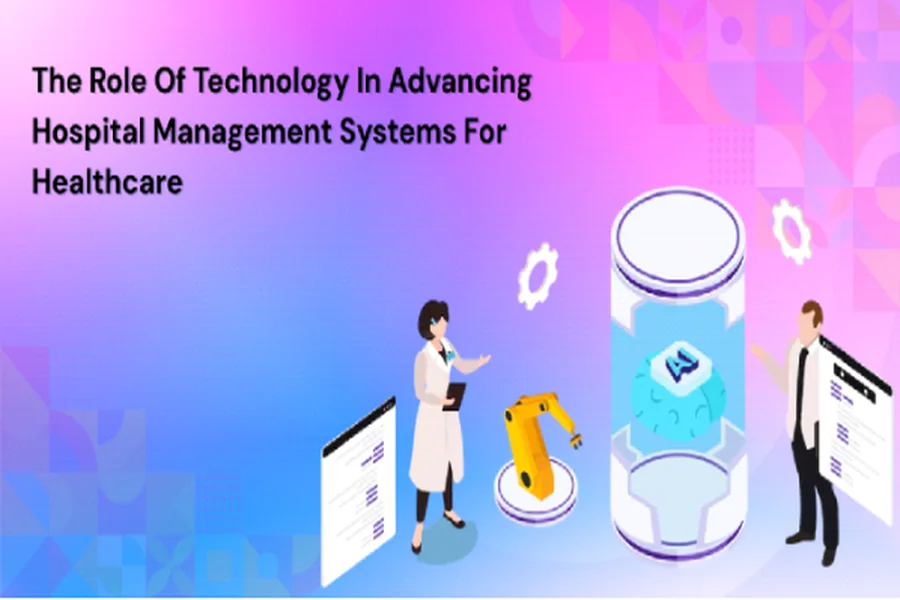
Technology is the key to revolutionize healthcare with cutting-edge Hospital Management Systems, maximizing operations and care. Hospitals are able to manage appointments, history, and billing with clinic management systems. In addition to that, the hospital queue management system maximizes patient flow, reduces waiting time, and maximizes satisfaction. All of these integrated together make better, data-driven, and patient-centric healthcare environments, which influence the operation of hospitals and clinics on a day-to-day basis.
Understanding of Hospital Management System
Hospital Management System (HMS) is an integrated set of computer programs meant to simplify the operation of a hospital and clinical processes, maintain the data structured, automate processes, and enable resource management, patient details, billing, and scheduling possible in a timely and effective manner. Hospital Management Systems in Healthcare play a significant role in delivering enhanced service quality provided, elimination of human error, and timely treatment of patients.
Modern Hospital Management System Software offers more capabilities to address hospital, clinic, and other health care organization settings. They are module-based types of software that can consist of varying hospital management system modules like outpatient and inpatient administration, electronic health record (EHR), pharmacy, laboratory, radiology, and bill modules. The modules are standalone but used as part of the overall system for information coordination and convenience of workflow.
With cloud computing, today most vendors offer hospital management systems online with remote access, real-time updation, and greater scalability. Online HMS solutions have been said to be the best solution for healthcare organizations seeking computerization of operations with data protection and regulatory compliance. These solutions become a key to offering effective, patient-care orientation.
Technological Developments Augmenting HMS
Benefits of technology have also largely improved Hospital Management Systems’ functionality, resulting in a revolution of healthcare delivery facility management. In the recent past, uptake of Hospital Management Software in India has greatly increased by providing hospitals with the ability to automate administrative, clinical, and financial operations from a single integrated platform.
Integrated Hospital Management System Software integrates standalone modules such as registration, billing, EMR/EHR, pharmacy, and radiology. Most notably is the integration of Laboratory Information Management System (LIMS), which automates laboratory procedures, ensures precise diagnostic reports, and quickens the posting of test results — all having a direct influence on patient outcomes. Additionally, technology solutions such as artificial intelligence (AI) and machine learning allow for predictive analytics, which enable faster decision-making and patient-focused care.
Cloud Hospital Information Management System solutions ensure access to patient data anywhere instantly, enhance collaboration between doctors and other healthcare professionals, and safeguard information in encrypted storage. Integration with IoT also enhances asset tracking, remote monitoring, and equipment maintenance.
These technologies are revolutionizing the healthcare infrastructure, specifically in India, as the hospitals seek affordable, scalable, and easy-to-implement technology to enable them to be efficient and regulatory-compliant. With growing hospital size and complexity, reliable technology support integrated within HMS platforms has become the need of the hour to provide quality care, reduce human errors, and attain operational excellence in departments — a new benchmark of digital-age healthcare management.
Functional Enhancements Through Technology
Hospital Management Systems in Healthcare have been transformed by technology with unheard-of functional enhancement that automates, reduces errors, and enhances patient care. Such innovations are transforming the manner in which hospitals plan their day-to-day operations. The most important functional enhancements are:
Effective Patient Registration and Scheduling: Sophisticated computer systems at hospitals offer electronic registration of patients and auto-scheduled appointments, reducing the waiting time of patients and enhancing patient satisfaction.
Effective Billing and Insurance Claims: Computerized billing erases the risk of human mistake, generates correct bills, and allows easy insurance claims processing, and hence the hospital’s revenue cycle is trouble-free.
Smooth Clinical Workflows: Physicians and clinicians are able to see patients’ information, laboratory results, and imaging on one Hospital Management System, and this allows rapid diagnosis and improved treatment planning.
Advanced Pharmacy Management Systems: The systems track drug stock, validate expiration dates, and interface with prescriptions for effective and timely dispensing of drugs.
Laboratory and Diagnostic Automation: Laboratory modules automate report generation, report more quickly, and enhance data accuracy department by department.
Telemedicine and Remote Monitoring: Hospitals can provide care outside their geographic area, a definite plus in rural or medically underdeveloped communities.
Real-Time Reporting and Analytics: The management would be able to monitor the key performance indicators, patterns of patient trends, and the utilization of resources and facilitate strategic planning and operational efficiency.
Strengths of HMS through Technology
An HMS technology-based system offers the complete range of benefits that enhance the quality, efficacy, and reliability of healthcare services. Best is the combined mode of Electronic Medical Records (EMR) and Electronic Health Records (EHR) without any glitch, by means of which clinicians get immediate access to actual patient data, medical history, lab results, and medications. It maximizes more informed clinical decisions and reduces errors.
With web-based hospital management system solutions, physicians and medical professionals are able to access vital information anywhere globally, and telemedicine, remote consultations, and remote location coordination are facilitated. Real-time access to data is provided by the systems, which is essential for the purposes of facilitating timely treatment as well as emergency response.
Functionally, automation reduces bureaucratic inconvenience in the form of automating billing, scheduling of appointments, and stock management. Automation increases employees’ productivity and offers improved attention to patient care. Data analysis software incorporated into HMS also helps to monitor performance, forecast patient patterns, and optimize resources.
Another useful benefit is data protection. Sophisticated HMS systems are supported by secure encryption, role-based access control, and regular backup to safeguard patient data from unauthorized access and offer confidentiality and integrity.
Overall, an electronically enabled HMS improves patient care quality and business effectiveness and facilitates health care regulation compliance and the hospital’s competitive edge in a rapidly evolving digital age.
Trends in HMS and Healthcare Technology
The future of healthcare is being built with changing at a lightning rate in hospital management software and similar digital technologies. Trends are revolutionizing hospital operation, care, and patient communication.
Among the trends are the augmented deployment of Artificial Intelligence (AI) and Machine Learning that enhance predictive analytics to become stronger, automate administrative functions, and create highly customized patient treatment plans. AI-powered virtual assistants and chatbots are also being integrated into patient engagement and support products.
Cloud-based hospital management software is increasingly being utilized as it can be scaled, is economical, and also has the ability of offering real-time information, thus making it most suitable for tele-care and multi-site hospitals, The second most important trend is an increased use of Lab Information Management Systems (LIMS) becoming more smart and system-integrated with hospital systems. They enable prompt diagnosis, improved quality control, and smooth intra-departmental communication.
Wearable devices and IoT sensors are also making patient monitoring in real-time and early disease detection possible in order to enable timely intervention.
All these technologies together promise a future where HMS platforms are smarter, interoperable, and patient-centric — driving digital transformation and setting new standards for evidence-based, quality healthcare delivery.
Conclusion
Technology is therefore the key to Hospital Management Systems development and better efficiency, accuracy, and care in hospitals. From AI-based analytics to cloud computing and e-health records, HMS solutions now integrate processes and enable data-driven decisions. Healthcare’s high aspirations necessitate hospitals to adopt futuristic hospital management technology. Smart, networked systems are the future of healthcare, transforming providers and even patients into an integrated digital space. AI, machine learning, IoT, and blockchain are all new-age technologies whose applications in hospital management are emerging.