

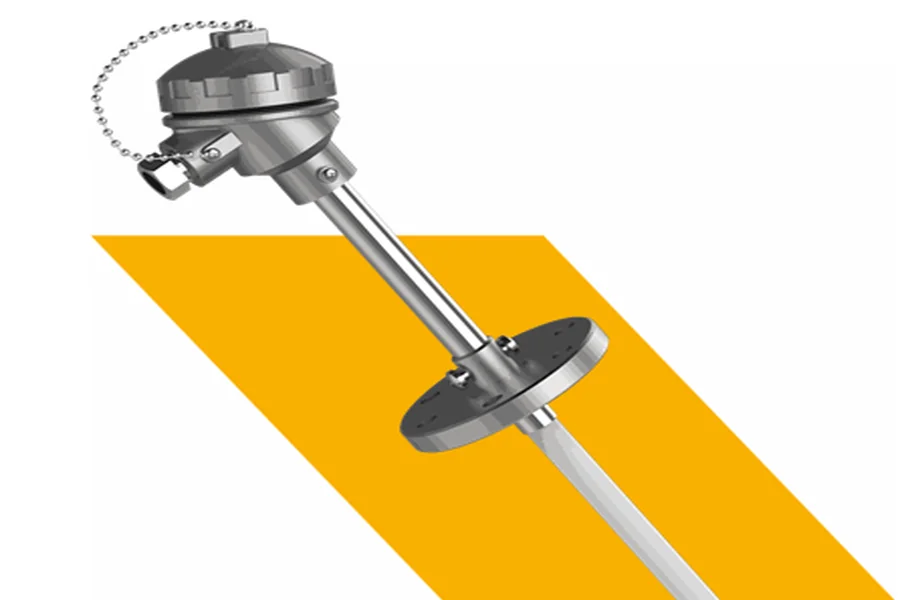
Have you ever wondered how engineers measure temperature in engines or industries where regular thermometers would melt? Those challenging tasks are handled with the help of devices like thermocouples.
The demand for temperature measurement solutions is increasing day by day, including in the aerospace and manufacturing sectors. As technology evolves, these devices are getting smarter than ever.
What’s really exciting is that the future of the thermocouple market looks incredibly promising, as innovations are happening all around the world. So, are you interested in knowing the future of thermocouple technology and how it will impact diverse industries? This blog is absolutely for you!
The Future of Thermocouple Technology
● Developments in Thermocouple Design and Materials
Thermocouple technology has recently advanced with an emphasis on increasing its accuracy and durability. The development of technology has improved their performance in difficult areas.
Due to the advanced ceramics and refractory metals, the thermocouples can now function at higher temperatures and in more corrosive conditions.
● Digitally Powered Smarter Thermocouples
Thermocouples will eventually become smarter due to digital technologies. Smart thermocouples can send data straight to control systems and phones in addition to measuring temperature. In industries, this will facilitate quicker decision-making.
For instance, if a machine overheats, the smart thermocouple can immediately notify employees to prevent a malfunction. In factories, these sensors can connect to other smart devices, store data, and identify faults.
● More Stability and Accuracy
Old thermocouples may lose their accuracy over time due to their chemical interactions. The development of new coatings and materials is underway to increase thermocouple longevity and accuracy. In addition, scientists are developing self-calibrating thermocouples, which can correct themselves if they drift out of range.
The sensitive electronics and pharmaceutical industries will benefit from these advancements since they will lower errors and maintain constant temperatures.
● Use of Thermocouples in Harsh and New Environments
Though they are already utilized in cold storage rooms and hot furnaces, thermocouples will function even better in harsher environments in the future. Scientists are developing new thermocouples to withstand harsh chemicals, higher temperatures, and space travel.
When reentering Earth’s atmosphere, space missions require sensors that can withstand extremely high temperatures. This is something that new kinds of thermocouples will be able to function without malfunctioning. Additionally, they will be useful in deep-sea equipment, renewable energy systems, and electric cars.
● Energy-Efficient and Eco-friendly Designs
Thermocouple technology will grow greener as environmental protection and energy conservation gain greater attention worldwide. New designs will function with less energy and fewer hazardous materials. Some thermocouples may even contribute to thermoelectric energy, which produces energy from heat.
For instance, modest amounts of energy can be produced from the waste heat of industrial machinery. Powering lights, sensors, and tiny gadgets lowers the total energy cost.
Future developments in thermocouple technology promise to be more intelligent, effective, and ecologically friendly. Thermocouples will be important in contemporary sectors because of their increased accuracy, digital capabilities, and capacity to function in harsh environments. Thermocouples have a promising and exciting future because of their energy conservation, safety enhancement, or space exploration.
The Impact of Thermocouples on Various Industries
● The Food and Beverage Sector
The food and beverage industries use thermocouples for various tasks, such as purification, refrigeration, aging, preparation, and packaging. You don’t have to worry when using a thermocouple temperature sensor because it provides precise temperature readings for cooking. It ensures your food is prepared precisely.
Thermocouples are frequently used in restaurant equipment such as boilers, fryers, warmers, toaster ovens, and barbecues. Additionally, thermocouples are used in culinary equipment for a wide range of food processing tasks as temperature-detecting tests.
● Manufacturing Sector
Maintaining the proper temperature in factories is crucial to producing high-quality goods. Machines that produce steel, plastic, glass, and other materials use thermocouples. For instance, a thermocouple helps monitor the temperature while steel melts in a furnace to prevent overheating or underheating.
This procedure is safer and more efficient. Thermocouples aid in the moulding of plastic components with the proper strength and shape during the plastics production process. Products could become dangerous or damaged if the temperature is not properly controlled.
● Power and Energy Industry
Thermocouples are essential in the power and energy industry. For these facilities to effectively generate power, boilers and turbines need to operate at the proper temperature. Thermocouples provide precise temperature data to ensure that the system operates safely and effectively.
They are also utilized in battery storage systems and wind turbines to prevent overheating. This enhances energy output, decreases energy waste, and lessens downtime.
Bottom Line
Hope now you have a clear idea of the future and the impact of thermocouples in various industries. The demand for thermocouples in multiple regions varies depending on the area’s economic conditions, industrial growth, and regulatory environment.
Are you running a business and looking for a wholesale industry that supplies a bulk amount of thermocouples? Tempsens comes as the best solution for you. We offer the best quality thermocouples for our resellers at budget-friendly prices. Contact us today and order your products right now!