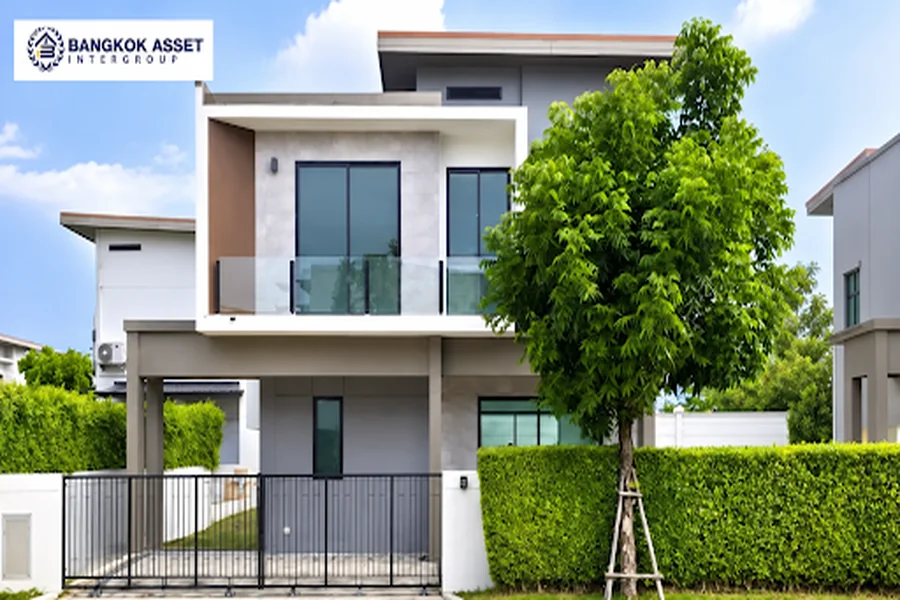


When Building a House GRITBUILD รับเหมาก่อสร้างบ้าน, one of the most critical elements you will need to decide is the right floor plan. Household design impacts everything from how easily you can host guests to how well you can meet your family’s future needs. An intelligent floor plan optimizes space to create a comfortable living environment, striking a balance between design and function. This article will guide you through selecting a floor plan that feels distinctly yours, making every square foot of your new space both meaningful and charming.
Clarify Your Lifestyle and Your Needs
Before you look at pictures of dream homes or talk to designers, spend some time doing a self-assessment. Understanding your priorities and day-to-day routines will help you narrow down the type of floor plan that suits your daily needs.
Household Size: Are you a couple planning to have children, or do you already have children who will require separate rooms? Or maybe you’re living in a multi-generational house with aging parents who need accessible living conditions.
Daily Tasks: Consider how you spend the majority of your time at your home. A large living room or dedicated media room is a must if you often host movie nights. For example, if you work from home, a quiet office space becomes a priority.
Entertaining Guests: Social butterflies who love to throw parties might want an open-concept design that seamlessly combines kitchen, dining, and living areas. Meanwhile, those who appreciate privacy and tranquility may prefer traditional layouts featuring purpose-built, yet defined, living spaces.
When you know how you live, you lay the groundwork for selecting a design skirting board ideas that enriches your daily rhythms.
Determine Your Budget Early
Budget limitations often dictate the scope of your building project, so it’s best to tackle finances before you fall in love with an elaborate floor plan. When calculating your budget:
Land and Site Costs: If you’re not purchasing a lot, include the expense of buying land and any necessary changes, such as grading or clearing, to prepare the property.
Construction Costs: The price of building materials fluctuates based on market conditions. To obtain a realistic estimate, consult with contractors or local builders, such as Gritbuild Company.
Permits and fees: Building permits can incur costs, as do impact fees and other administrative expenses. Ensure you’re aware of local regulations and include these fees in your overall budget.
Contingency Fund: Reserve a minimum of 10% of your overall budget for unanticipated costs, such as design updates or varying material prices that may arise during a project.
By determining how much you can realistically spend, you won’t be disappointed when you fall in love with a floor plan that is out of reach.
Evaluate Your Terrain and Development Orientation
The prettiest design may not be ideal if it doesn’t complement the physical attributes of your plot. [And the size, shape, and orientation of your land have a big effect on which floor plans suit you best. Key points to consider:
Topography: A lopsided lot may be suitable for a walkout basement or multi-level design, while flat land is typically well-suited for single-story homes or ranch-style designs.
Lighting: The placement of prominent living areas, such as the kitchen or family room, to maximize ambient light will save energy costs and enhance the sense of privacy.
Local Climate: In colder climates, grouping bathrooms and kitchens on the same floor can help simplify the plumbing system. Open-air porches and covered terraces in warmer climates assist with cooling and ventilation.
Views and Privacy: Ideally, position your main common areas to take advantage of the best vantage points, maximizing scenic views. Bedrooms and private spaces, in contrast, might also be oriented away from high-traffic roads or neighbors’ yards.
You should adapt your floor plan to the surroundings, even if taking advantage of your location offers the greatest benefits, and to avoid potential barriers.
Evaluate Function and Flow
An effective floor plan strikes a balance between open areas for socializing and more private, quieter rooms for retreat. The best and easiest way to get a feel for flow is to visualize how people will move through your home:
Entryway Design: Consider how to manage foot traffic and outdoor elements. An entryway, foyer, or mudroom can help keep dirt, shoes, and coats neatly organized so the rest of the home doesn’t have to deal with the clutter.
Kitchen Delight: For most homes, the kitchen is truly the heart. Emphasize that it be located for efficient meal prep and to be easily accessible from other common areas.
Bedroom Arrangement: Bedrooms are best hidden away to minimize noise intrusion. Some families like a split-bedroom layout, which puts the primary suite far from the secondary bedrooms for added privacy.
Connectivity vs. Separation: Open-concept designs promote togetherness and a multi-function lifestyle (children doing homework at the dining room table while parents cook dinner in the kitchen). Dedicated spaces, however, are sometimes necessary to avoid distractions in home offices or media rooms.
Visualizing daily habits, mornings scrambling to leave the house, evenings with family, weekends hanging out together, will help you optimize the home’s layout to suit your lifestyle.
Always show the future for more expansion or needs
When selecting a floor plan, it pays to look past your present situation. Life is changeable, and your home should reflect changing needs:
Family Expansion: If you have children or expect to welcome aging relatives, adequate bedrooms and accessible bathroom layouts may be important.
Flex Rooms : Bonus Space: A flexible space can add versatility. A loft, den or attic can metamorphose over time from playroom to study, guest room or even a home gym.
Aging in Place: Wider hallways, no-step entryways, and a bedroom on the first floor can provide years of ease if you plan to stay in your house for decades.
Even small touches, such as widened doorways or convertible attic space, will go a long way toward making your floor plan adaptable to future changes in family size or lifestyle.
Striking a Balance Between Aesthetic and Practical
While aesthetics are key, your home’s layout must also withstand the rigors of everyday life. Aim for aesthetics to match function:
Focal Points: Build around a feature that defines your home’s emotional tenor, whether it’s a formal fireplace, a dramatic staircase, or glass walls.
Incorporates Plenty of Storage: Cabinets, closets, built-in shelving, and a well-organized pantry minimize clutter and open up every room to make it feel more voluminous and welcoming.
Proportions: Big rooms with high ceilings can be dramatic but may end up appearing empty or be expensive to heat and cool. Select a scale that suits your style and budget.
The external should embody the internal. A unified look from the outside in modern style, craftsman style or farmhouse style ties the home’s overall aesthetics together.
Bear in mind that a gorgeous home can quickly become unpalatable if the appropriate functionality to enable day-to-day living is lacking.
Building Codes, HOA Rules, and local restrictions
As ideal as the floor plans might look, they’re obliged to meet local guidelines. Before you commit, check any building codes, community bylaws or homeowner association (HOA) covenants that may restrict your design options:
Setback Requirements: Local laws may dictate the distance you must maintain from property lines, limiting the width and height of your home.
Feel-Good Factor: HOAs can require members to follow rules regarding home colors, types, styles, and yard elements, among other things. See if they govern things such as roof type, window placement or façade materials.
Permits and Inspections: Building permits can take time to secure, which may stall your project. If your floor plan is compliant, it can fast-track the approval process.
Adhering to these guidelines will help you avoid penalties, delays, or forced design changes once construction begins.
Consult with Professionals
Finding the perfect floor plan can be intimidating, especially when trying to balance budget restrictions, design elements, and, most importantly, policies. An experienced team of experts, including architects, interior designers, and established builders, can facilitate informed decision-making. At Gritbuild Company, we can help with:
Plans: Plans are customized according to specific lifestyle needs and site conditions.
Budget Management: Our experience enables you to make informed decisions about where to allocate resources (e.g., high-traffic areas) and where to conserve (e.g., less-used rooms).
Regulatory Compliance: We navigate local permits and zoning laws to ensure your plan passes all inspections without requiring expensive revisions.
Quality of Construction: With a professional team monitoring every aspect of the project, you can have peace of mind knowing the result will endure for generations and match your aesthetic. If you’re looking for inspiration from experienced real estate professionals who understand residential needs in depth, consider exploring the work of Signature Properties.
Collaborating closely with professionals helps mitigate stress, ensuring you trust the final design of your home.
Edit and Finalize Your Floor Plan
The best-laid plans still need some adjusting. Once you’ve considered these various elements, lifestyle, space limitations, pricing, future growth, and legal issue,s take a hard look at your floor plan:
Room Sizes: Confirm that high-use rooms (kitchen, living room, primary bedroom) are sized comfortably. Sometimes knuckling under in one area a little gives you the chance to expand in another that’s more important.
Finally, Addressing Storage Concerns: If you anticipate needing more storage in specific areas, consider adding closets or pantries, or making built-in cabinets larger.
Traffic Flow Reassessment: Recast daily routines. How much space does a busy area, like a kitchen or mudroom, have to accommodate multiple people moving through simultaneously?
Refine decoration aspects: Once your construction process begins, lock in built-in design features, which can be decorative nooks, nice-looking shelving or unique architectural details.
Your floor plan needs to feel cohesive, intuitive, and aligned with your budget. When you’re happy with the design, you’re ready to proceed with construction.
Conclusion
Selecting the right floor plan is arguably the most important step in building a House that creates your everyday living experiences. An intentional layout will seamlessly blend function, beauty, comfort, and flexibility, setting the stage for a home that can meet your family’s short-term and long-term needs. By clarifying your lifestyle, creating a realistic budget, considering land restrictions, and working with industry professionals, you will be well on your way to building the home of your dreams that truly feels like yours. Whether you need help making your dreams a reality, Gritbuild Company is an expert to help you and make it the best journey of building the home of your dreams.