
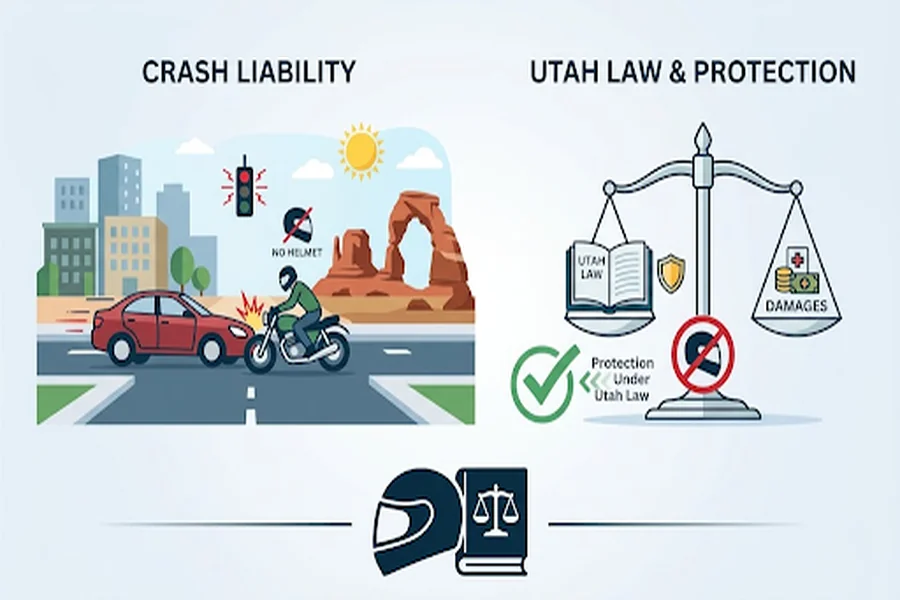
Utah roads are great to ride motorcycles on, but many riders do not wear a helmet by choice or for some reason. After a Utah motorcycle accident, not wearing a helmet doesn’t automatically prove that you are at fault. However, it provides insurers a chance to shift blame onto you and reduce your compensation.
Utah law provides specific protections for riders based on who caused the crash, what injuries you suffered, and what evidence supports your claim.
This article explains all of this and what to do after a crash and how an experienced local motorcycle accident attorney can help you recover what you deserve.
Let’s get down to business.
Does Utah Require Motorcycle Riders to Wear Helmets?
Utah law under Code §41-6a-1505 says that an individual under 21 years old, without a helmet, should not ride on a highway. This implication is not limited to a motorcycle, but eclectic bicycles and bikes.
Also, the protective headgear must meet the Department of Transportation (DOT) safety standards.
However, if your age is 21 or crossed that number, Utah law permits you to ride without wearing a helmet. So, if an adult rider is required to wear a helmet and he does not do so, it can negatively affect a motorcycle accident claim.
Can Not Wearing a Helmet Affect a Utah Motorcycle Accident Claim?
Yes, it can, but not automatically make a motorcycle rider responsible. For instance, another driver may have caused the crash by violating a red light, failing to yield, following too closely, or driving while distracted. In that scenario, helmet use does not change what that driver did.
Utah law also directly addresses helmet nonuse in civil cases, and the table below explains this perfectly.
| Legal Aspect | Impact of Nonuse on Claim | Legal Ground / Context |
| Crash Fault | None | Focuses strictly on driver actions (red lights, distraction). |
| Non-Head Injuries | None | No link to legs, spine, or internal trauma. |
| Head Injuries | None (Legally) | Proven purely via medical evidence. |
| Fault Allocation | Barred | Cannot be used as comparative/contributory negligence. |
| Evidence & Damages | Inadmissible | Utah Code § 41-6a-1505(6) forbids its use to reduce damages. |
This means Utah law limits how helmet nonuse can affect a motorcycle accident claim. Under Utah’s comparative negligence rule, what matters is who caused the crash, your injuries, and your losses.
What Injuries Can Make Helmet Use an Issue?
Helmets are designed to protect the head (a very sensitive part of the human body) and face of the rider. However, when a rider already has a head or face injury, it becomes difficult to wear a helmet. Injuries may include:
- Traumatic brain injuries
- Concussions
- Skull fractures
- Facial injuries
- Other head trauma
A motorcycle crash can also lead to other serious injuries with no connection to helmet use, like broken bones, spinal injuries, road rash, internal injuries, and damage to the arms, legs, or pelvis.
Medical records remain important in either situation. They can show what injuries occurred, when symptoms began, what treatment was needed, and how the injuries affect your daily life. Utah’s helmet statute limits the use of helmets and nonuse in civil litigation. It does not remove the need to prove the injuries and losses that form the basis of a claim.
What Evidence Can Support a Motorcycle Accident Claim?
Strong evidence can help establish how the crash happened and what injuries followed. Useful crash evidence may include:
- Police reports
- Witness statements
- Photos of the crash scene
- Vehicle damage photos
- Traffic or security camera footage
- Dashcam footage
- Accident reconstruction evidence
Medical evidence may include:
- Emergency room records
- Medical imaging
- Doctor’s records
- Treatment records
- Medical bills
- Physician opinions
- Records showing future treatment needs
After a motorcycle collision, do not throw away the helmet and other riding gear or repair the damaged equipment. In case of a dispute, this can act as evidence related to the crash.
What Should You Do After a Utah Motorcycle Accident?
After a motorcycle crash, take the steps below to protect both your health and your claim:
- Get medical care, as some injuries may not be obvious at the scene.
- Preserve your helmet and riding gear in their damaged condition.
- Document photos of the road, vehicles, damage, and visible injuries from the crash scene.
- Report to the police and keep a copy.
- Keep medical records and bills. They can support your injury and damage claims.
- Save witness names and contact details, which can become important later.
- Avoid guessing about facts you do not remember in front of insurers.
- Consulting with a motorcycle accident attorney is often beneficial.
Can You Recover Compensation Without Wearing a Helmet?
Yes. Helmet nonuse does not automatically prevent a motorcycle accident claim. Depending on the facts, a claim may include losses such as:
- Medical expenses
- Future medical care
- Lost wages
- Reduced earning capacity
- Pain and suffering
- Motorcycle and other property damage
The evidence must still support the claimed injuries and losses. For example, medical records can help connect a broken bone to the crash. Treatment records can show the care needed during recovery, and wage records can support a claim for lost income. Ensure to file a personal injury claim within four years from the accident date.
How Can a Utah Motorcycle Accident Lawyer Help?
Not all personal injury cases are simple. When disputed liability, serious injuries, insurance issues, and questions about helmet use are involved, it’s better to talk to a Utah motorcycle accident lawyer.
At The Law Offices of Roberto Hernandez, we listen to victims carefully, review all aspects of your case, and explain what options you have. If you were injured in a Utah motorcycle accident because of another person’s negligence, we’ll fight to get you the compensation you deserve under Utah law.
FAQs
Can I bring a motorcycle accident claim if I was not wearing a helmet?
Yes, Utah law allows this. If you are 21 years of age or older, or you have some injuries and can’t wear a helmet, you can file a claim. Utah law also states that helmet nonuse does not constitute comparative.
What if I was under 21 and was not wearing a helmet?
If you are under 21 years of age, were not wearing a helmet, and were involved in an accident, it does not automatically bar an injury claim. Utah law still limits how helmet nonuse may be used in civil litigation.
Can an insurance company ask whether I wore a helmet?
An insurer may ask questions during its claim investigation. The more important issue is how helmet nonuse may be used in a civil case. Utah law limits its use as evidence of negligence, injuries, and mitigation of damages.
Does helmet use matter for every motorcycle injury?
No. Helmet use is most directly related to head and facial injuries. Broken bones, spinal injuries, road rash, and many other injuries may have no direct connection to helmet use.
Conclusion
Not wearing a helmet does not automatically prevent a Utah motorcycle accident claim. Utah law says helmet nonuse does not constitute comparative or contributory negligence. It also limits the use of helmet nonuse as evidence in civil litigation. What still holds the most importance is the facts of the crash, your injuries, and your losses. Have questions in mind? An experienced Utah motorcycle accident attorney can review the facts and explain your options.