
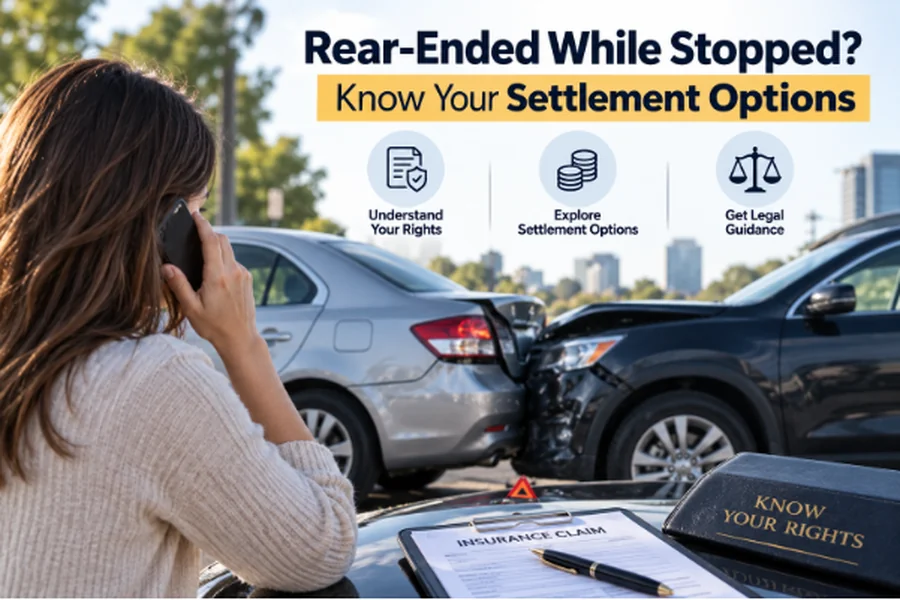
Rear-end collisions are among the most shocking and common motor vehicle accidents that happen on Utah roads. In most cases, the driver who struck your vehicle is held responsible because it is obvious that stopped vehicles can’t cause a rear-end accident.
If you have also been hit from behind, it’s natural that you may think that damages were only caused to your car. But in days or weeks, you may realize that you also have suffered physical or emotional injuries.
Fortunately, you have the legal right to seek compensation for rear-ended while stopped accidents. However, seeking a fair settlement is not always as easy as filing an insurance claim and accepting the settlement offer.
This guide will explain your settlement options and insurance adjuster tactics to negotiate, and will help you make an informed decision after the accident.
Why Do Rear-End Accidents Happen?
Rear-end accidents mostly occur because the trailing driver fails to maintain a safe distance, commonly because of the following reasons.
-
Distracted Driving
Distracted driving is the top reason for causing rear-end collisions on Utah roads. It may include texting on a phone, talking to a passenger, or even happening while the driver is adjusting navigation.
-
Speeding
Speeding and tailgating are other big reasons that can result in rear-end collisions because even a few seconds’ delay in applying brakes can result in a strike.
-
Impaired Driving
Driving under the influence of drugs, fatigued driving, being drunk while driving, traffic congestion, or poor vehicle maintenance can also cause rear-end collisions.
Common Injuries in Rear-End Collision
Liability matters, especially when personal injuries are involved. Potential injuries after being rear-ended while stopped may include:
- Whiplash and neck strain
- Back injuries, including herniated discs and soft-tissue damage
- Shoulder and upper-body injuries
- Concussions and traumatic brain injuries
- Headaches, dizziness, and vision problems
- Numbness, tingling, or nerve pain
- Knee, wrist, or hand injuries from bracing during impact
- Emotional distress, anxiety, or post-traumatic stress symptoms
What Settlement Options Do You Have After a Rear-End Accident?
In Utah, most settlement offers are reached outside court unless you have filed a personal injury lawsuit. Here are your possible settlement options.
- PIP Coverage: Use your own Personal Injury Protection (PIP) insurance coverage. As Utah is a no-fault state, your PIP coverage will cover your immediate medical bills and lost wages for up to $3000.
- File Insurance Demand: If your medical bills exceed the base threshold of $3000, you have the legal right to submit an insurance demand letter for the at-fault driver’s insurance company to cover your medical bills, lost wages, and vehicle repair costs.
- Personal Injury Lawsuit: You can also file a personal injury lawsuit if the other driver’s insurance company refuses to pay car accident compensation within a 4-year period from the accident under Utah Code 78B-2-307. You can recover your loss as long as you are less than 50% at fault in the accident.
How Much is a Rear-End Accident Settlement Worth?
Rear-end settlements may seem straightforward, but that doesn’t mean insurance companies will not try to minimize the final payouts or deny your valid claim. The claims are mostly tied to personal injuries and your medical documentation.
But still, the estimated settlement range is given below in the table:
| Injury Severity | Example | Settlement Range |
| Minor | Soft tissue damage, minor bruising, back pain, whiplash | $2,000-$25,000 |
| Moderate | Herniated discs, concussions, simple fractures | $25,000-$75,000 |
| Severe | Traumatic brain injuries, spinal injuries, injuries that require surgical intervention | $75,000-$300,000 |
| Catastrophic | Permanent disability, paralysis, wrongful death | $300,000-$1Million |
What Evidence Can Strengthen Your Settlement Claim?
If the other driver disputes fault, then only solid evidence can help you settle the argument in court. A car accident attorney can also help gather evidence, deal with the insurance company, and pursue fair compensation.
Here’s the list of evidence that can help you strengthen your settlement claim:
Proof to Document The Collision
You may need the following documented proof to clear your side in a “rear-ended while stopped” accident.
- Police reports: It’s the official record of the accident.
- Photos of the accident scene: Document road conditions and traffic signals.
- Photos of both vehicles: Help in understanding the collision impact and direction.
- Dashcam footage: Captures the collision as it happened.
- Traffic camera footage: This proof acts as an independent visual confirmation.
Proof Confirming Your Loss
Utah courts may also need documented proof to confirm your loss before passing any judgment.
- Witness Statements: Confirm your claim from a third-party perspective.
- Medical Records: Prove your injuries and treatment costs.
- Lost Wage Documentation: Support your income loss claims.
All in all, you need a personal injury lawyer on your side at this stage if you want to walk through these legal procedures without any hassle.
Should You Accept the Insurance Company’s First Settlement Offer?
No, you should never accept the first settlement offer because it is mostly a lowball figure that is designed to settle your case cheaply.
Here are the reasons why they should be avoided:
- They rarely cover costs for long-term expenses, like physical therapy or chronic pain management.
- First settlement offers never cover non-economic damages, like emotional distress and trauma.
- Insurance adjusters think that you might be stressed by facing sudden bills and looking for a fast solution to get through this unexpected financial crisis.
- Consequently, they mostly offer a low-value settlement that doesn’t compensate your medical bills, future treatment costs, and lost wages fairly.
- If you accept that first settlement offer and sign a release of liability waiver, your claim gets permanently closed.
Therefore, if you have received a similar offer, it’s wise to ask your adjuster how he has calculated the particular amount. And if the adjuster fails to give a valid reason, simply reject it in a formal letter.
Conclusion
Not all rear-end accident settlements require legal representation in Utah court. Because being a no-fault state, these disputes mostly get resolved with your PIP insurance coverage.
But if you were rear-ended while stopped and have personal injuries, you may need legal consultation to protect your rights.
You can always count on Cockayne Law whether you want to know your settlement options or you want an experienced attorney to represent your personal injury claim in court.
FAQs
Who is usually at fault in a rear-end collision?
The driver who strikes the vehicle in front is mostly presumed at fault in rear-end collision accidents. It happens because drivers are always required to maintain a safe distance from other vehicles, whether while driving, applying brakes, or even parking.
Can I get compensation for whiplash after being rear-ended?
Yes, whiplash is one of the most common injuries you may encounter from rear-end collisions. However, the good news is it is legally recoverable when it is caused by another driver’s negligence.
How do I negotiate a rear-end accident settlement?
You can start by gathering medical records, bills, lost-wage documentation, photos, and other evidence that supports your losses. Review the insurer’s offer carefully and respond with documentation showing why you believe your claim is worth more.
How long does a rear-end accident settlement take?
It entirely depends on the complexity of your case. The minor cases with clear liability may resolve in a few weeks, while claims with disputed fault may take a few months or even a year to resolve.